An abbreviated list of fashion and textile design schools and colleges in the United States:
Parsons School of Design, New York Fashion Institute of Technology (FIT), New York
Pratt Institute, New York
Rhode Island School of Design, Providence
Savannah College of Art and Design (SCAD), Savannah, Atlanta, Hong Kong
California College of the Arts, San Francisco
Otis College of Art and Design, Los Angeles
Academy of Art University, San Francisco
Kent State University, Kent, Ohio
Drexel University, Philadelphia
University of Cincinnati, Cincinnati
Virginia Commonwealth University, Richmond
Massachusetts College of Art and Design, Boston
Columbia College Chicago, Chicago
School of the Art Institute of Chicago, Chicago
University of Minnesota-Twin Cities, Minneapolis
Iowa State University, Ames
University of Georgia, Athens
University of North Texas, Denton
Keep in mind that academies, schools, colleges, universities and institutes serve different purposes within the structure of college or university, with schools being larger and more general in focus, while departments are smaller and more specialized in their areas of study.
In all cases, textiles present elevated chemical, fire, noise and physical hazard associated with textile-related machinery.
This content is accessible to paid subscribers. To view it please enter your password below or send mike@standardsmichigan.com a request for subscription details.
The earth makes “one” trip around the Sun in approximately 365.2425 days. An additional day every four years helps synchronizes the calendar year with the solar year — assuming a perfect circle. Alas, the orbit is far from circular — it is elliptical and eccentric — thus confounding assumptions about climate change.
Today we revisit our earlier inquiries, readings and research with some consideration to how computer software deals with a leap year. Use the login credentials at the upper right of our home page.
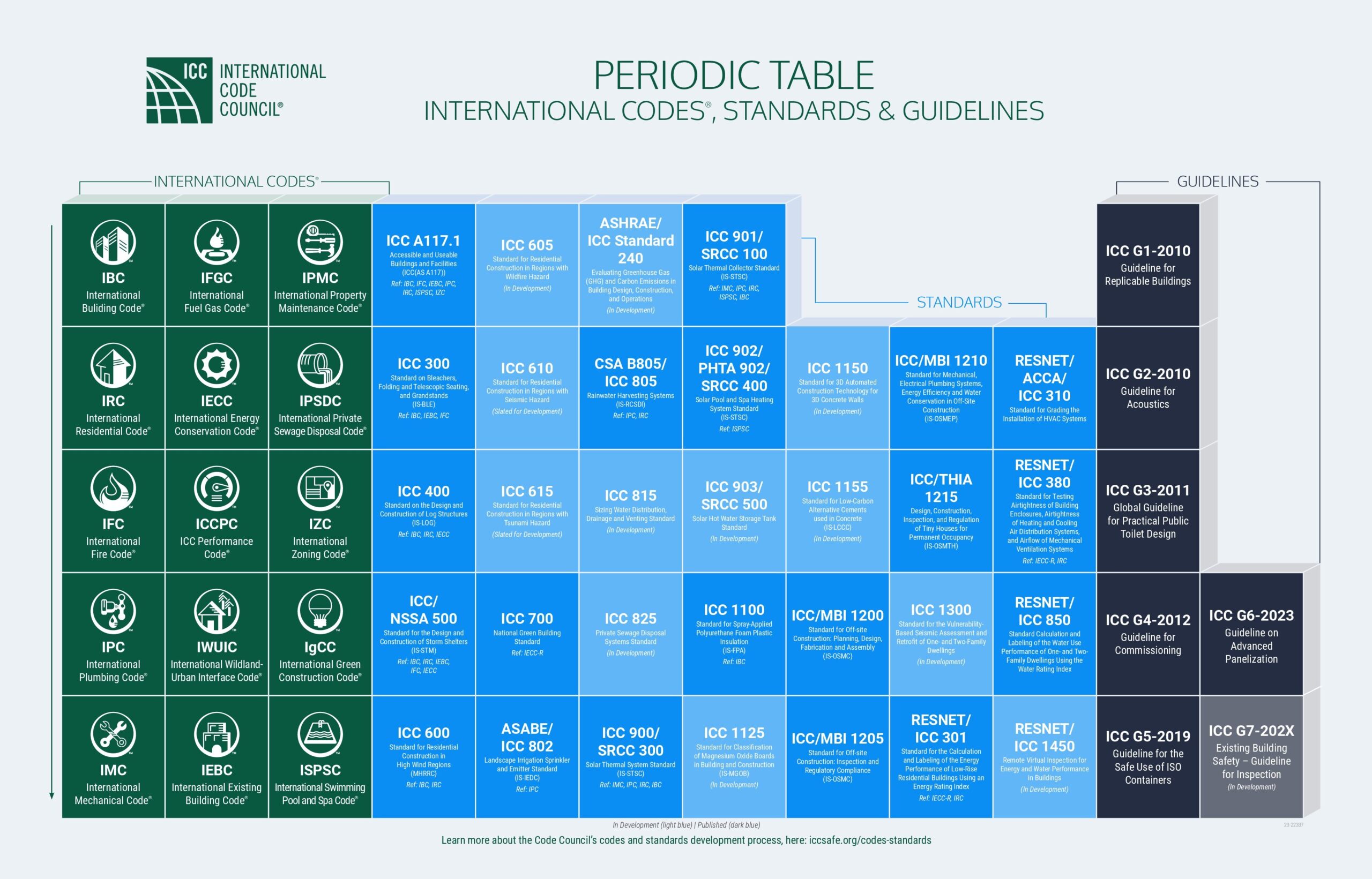
Today we survey the broad sweep of the International Code Council catalog of best practice titles; incorporated by reference into public safety regulations in most of the United States. This session will be a “survey” and “organizational” session when we limit detail and simply identify priority titles and the technical specifics in play over the next twelve months.
Use the login credentials at the upper right of our home page.
With the proportion of classroom occupancies receding, those spaces that cannot be offloaded onto the internet remain — collaborative creative spaces among them. There are nearly 4000 colleges and universities with garment industry programs; nearly 600 in the United States. These institutions include specialized fashion schools, as well as larger universities and colleges that offer fashion programs or courses as part of broader art, design, or business degree programs.
Today we examine the safety and sustainability of the research and collaborative occupancies that enable this industry to train the next generation. It is a cross-cutting topic that draws from many catalogs.
ASTM International
Consumer Product Safety Commission
Global Organic Textile Standard
Institute of Electrical and Electronic Engineers
International Code Council
International Organization for Standardization
International Labour Organization
National Fire Protection Association
Occupational Safety and Health Administration
Underwriters Laboratories
Women’s fashion 1910’s-2010’s in 30 seconds using AI
The fashion and garment industry plays a significant role in shaping culture and society in many ways: Here are a few examples:
Self-expression and identity – Clothing and fashion can be used as a means of self-expression and a way to communicate one’s identity to the world. People use clothing to express their individuality, cultural heritage, and personal values.
Creativity and innovation – The fashion industry is a creative industry that thrives on innovation and new ideas. Designers and fashion brands push the boundaries of creativity and constantly come up with new styles and trends that can influence the broader culture.
Economic impact – The fashion and garment industry is a significant contributor to the global economy, providing jobs and supporting businesses in various parts of the supply chain. The industry also drives consumer spending and contributes to economic growth.
Sustainability and social responsibility – In recent years, the fashion industry has increasingly focused on sustainability and social responsibility, with many brands and organizations taking steps to reduce their environmental footprint and improve working conditions in the supply chain.
Cultural exchange and globalization – The fashion industry is a global industry that allows for cultural exchange and cross-cultural understanding. Fashion designers draw inspiration from different cultures and traditions, and fashion shows and events bring together people from all over the world to celebrate creativity and diversity.
Join us today with the login credentials at the upper right of our home page.
Co-Founders daughter, also Standards Michigan manager of Legal Affairs
New update alert! The 2022 update to the Trademark Assignment Dataset is now available online. Find 1.29 million trademark assignments, involving 2.28 million unique trademark properties issued by the USPTO between March 1952 and January 2023: https://t.co/njrDAbSpwBpic.twitter.com/GkAXrHoQ9T