
Category Archives: @NFPA

Loading
loading...

Guide to Premises Security

2026 Revision First Draft Ballot | NFPA 730

2026 Revision First Draft Report | NFPA 731

First Draft Meeting Agenda (Meetings were remote)

NFPA 731: Standard for the Installation of Premises Security Systems
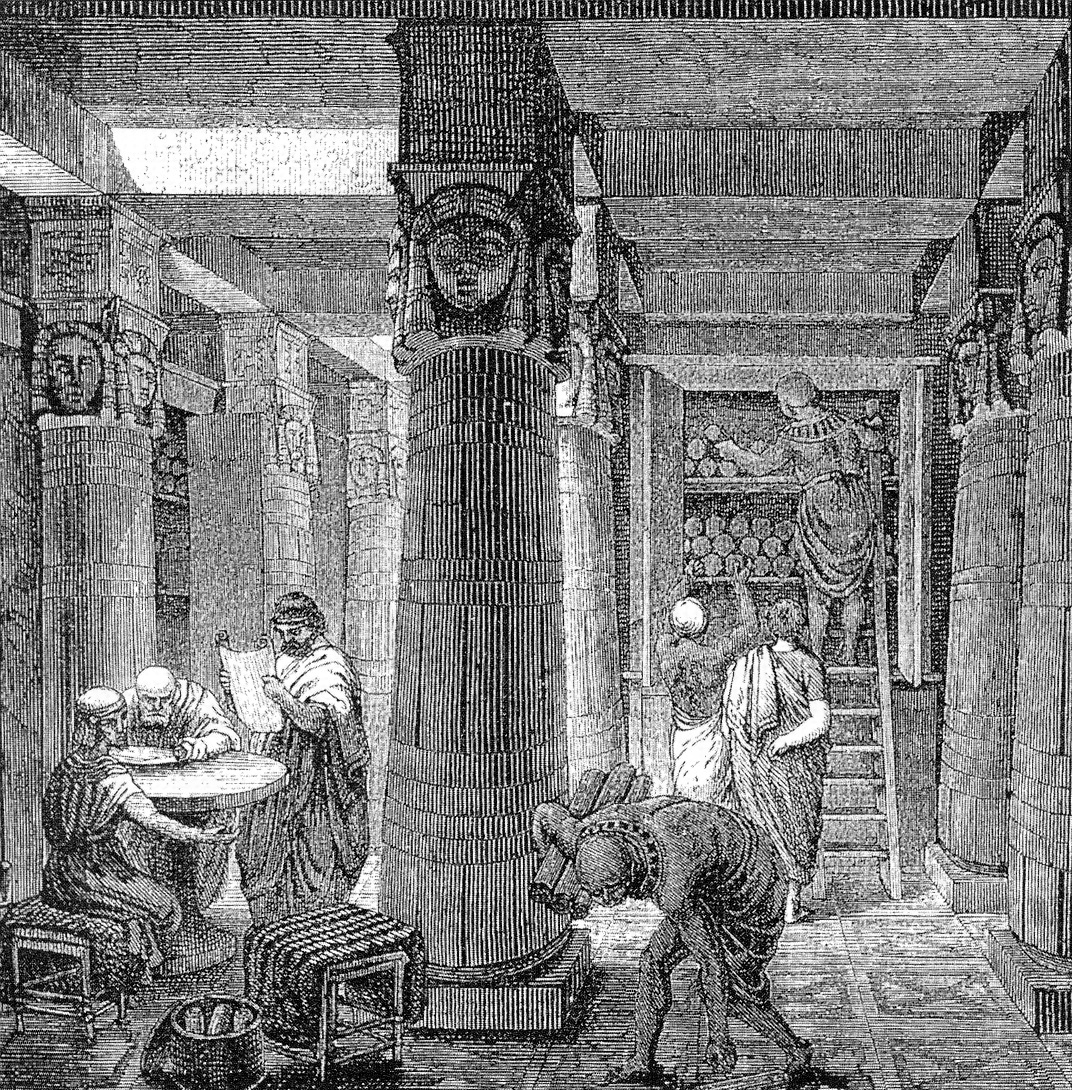
Library of Alexandria

NFPA 730 Guide to Premise Security guide describes construction, protection, occupancy features, and practices intended to reduce security vulnerabilities to life and property.  Related document — NFPA 731 Standard for the Installation of Electronic Premises Security Systems covers the application, location, installation, performance, testing, and maintenance of electronic premises security systems and their components.

The original University of Michigan standards advocacy enterprise (see ABOUT) began following the evolution of NFPA 730 and NFPA 731 since the 2008 Edition.   That enterprise began a collaboration  with trade associations and subject matter experts from other universities (notably Georgetown University and Evergreen State University) to advocate user-interest concepts in the 2011 edition.    A summary of advocacy action is summarized in the links below:

in the appeared in a trade association journal Facilities Manager:

APPA Code Talkers Anthony Davis Facility Manager May June 2011

An online presentation by Michael C. Peele (Georgetown University) — one of the voting members of NFPA 730 and NFPA 731 technical committees– was recorded and is linked below.

FREE ACCESS: 2023 Guide for Premises Security

FREE ACCESS: 2018 NFPA 730 Guide to Premise Security

Public comment on the First Draft of the 2026 Edition will be received until January 3, 2025.  You may key in your own ideas by clicking in to our user-interest Public Consultation Meeting Point or by communicating directly with the NFPA.

This title remains on the standing agenda of our Security colloquia.  See our CALENDAR for the next online meeting; open to everyone.
Electrical Inspector Professional Qualifications

Electrical Training

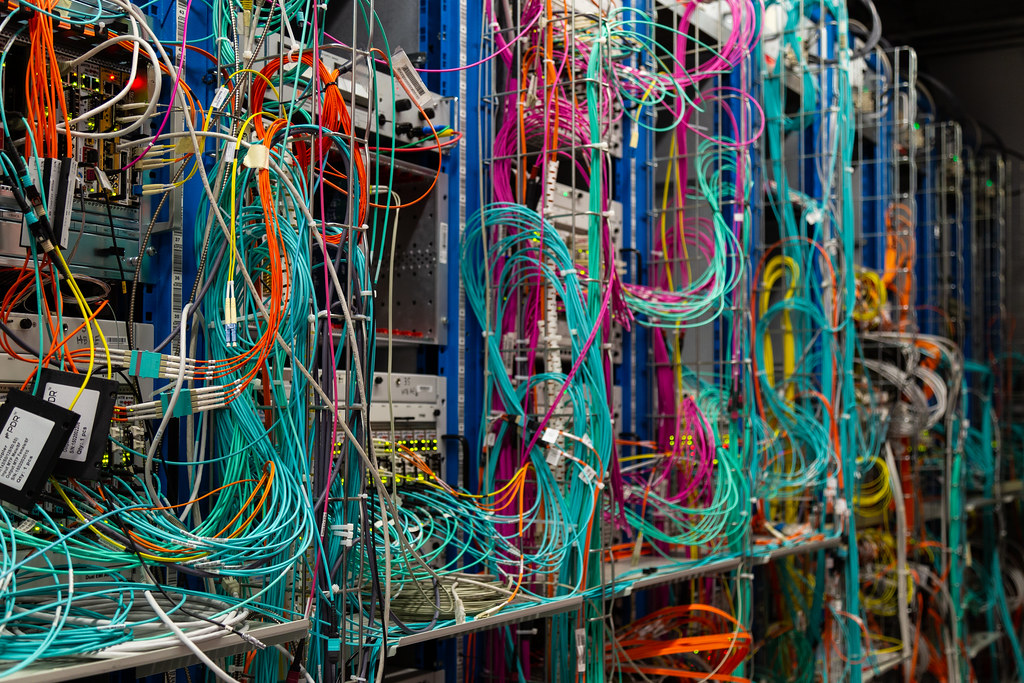
Compact Muon Solenoid / European Organization for Nuclear Research

NFPA 1078 Standard for Electrical Inspector Professional Qualifications identifies the minimum job performance requirements for electrical inspectors.   Qualifications for electrical inspectors are heavily regulated by state public safety agencies.   Many, if not most electrical inspectors are former electricians.   This means that part of their career has been spent working as an  Labor/Installer/Maintenance stakeholder, and another part of their career has been spend as an Enforcement stakeholder.  (See NFPA Classification of Committee Members).   This can be a sensitive condition in large research universities that have a resident full-time enforcement staff ; the subject of a separate post.

Free access to the current 2024 edition is linked below:

NFPA 1078 2024 Free Access

The 2028 revision is now open for public input.  It is always enlightening to follow the transcripts of the previous revision cycles to see what ideas have been in play.

Public Input Report

Electrical Inspection Practices (EEP-AAA)

Professional Qualifications (PQU-AAC)


Public input on the 2028 revision will be received until June 4, 2025

We have found that passions are elevated among stakeholders whenever compliance and conformance revenue is involved — i.e. in any consensus product that covers labor (i.e. billable hours).

We include this standard on the standing agenda of our monthly Human Resource, Power and Infotech teleconferences.   See our CALENDAR for the next online meeting; open to everyone.

"One day ladies will take their computers for walks in the park and tell each other, "My little computer said such a funny thing this morning" - Alan Turing


Outdoor Deicing & Snow Melting

Electrical Safety

“Snow at Argenteuil” | Claude Monet (1875)

Today our focus turns to outdoor electric deicing and snow melting wiring systems identified as suitable for the environment and installed in accordance with the manufacturer’s instructions.  They work silently to keep snow load from caving in roofs and icicles falling from gutters onto pedestrian pathways.

While the voltage and ampere requirement of the product itself is a known characteristic, the characteristic 0f the wiring pathway — voltage, ampere, grounding, short circuit, disconnect and control — is relatively more complicated and worthy of our attention.   Articles 426-427 of the National Electrical Code is the relevant part of the NEC

Free Access 2023 National Electrical Code

Insight into the ideas running through technical committee deliberations is provided by a review of Panel 17 transcripts:

2023 NEC Panel 17 Public Input Report (633 pages)

2023 NEC Panel 17 Public Comment Report (190 pages)

We hold Articles 427 in the middle of our priority ranking for the 2023 NEC.   We find that the more difficult issues for this technology is the determination of which trade specifies these systems — architectural, electrical, or mechanical; covered in previous posts.   Instead, most of our time will be spent getting IEEE consensus products in step with it, specifically ANSI/IEEE 515 and IEEE 844/CSA 293.

Comments on the Second Draft of the 2026 NEC will be received until April 18th.

454c656374726f746563686e6f6c6f6779

We collaborate with the IEEE Education & Healthcare Facility Committee which meets online 4 times per month in European and American time zones.  Since a great deal of the technical basis for the NEC originates with the IEEE we will also collaborate with IEEE Standards Coordinating Committee 18 whose members are charged by the IEEE Standards Association to coordinate NFPA and IEEE consensus products.

https://websites.umich.edu/~jensenl/visuals/album/lawquad/https://869.e8e.myftpupload.com/indiana/

Issue: [19-151]

Category: Electrical, Energy

Colleagues: Mike Anthony, Jim Harvey, Kane Howard, Jose Meijer


LEARN MORE:

IEEE Standard for the Testing, Design, Installation, and Maintenance of Electrical Resistance Heat Tracing for Commercial Applications

844.2/CSA C293.2-2017 – IEEE/CSA Standard for Skin Effect Trace Heating of Pipelines, Vessels, Equipment, and Structures–Application Guide for Design, Installation, Testing, Commissioning, and Maintenance


Guide to Premises Security

School of Aristotle | Gustav Spangenberg

Managing capital‐intensive campus infrastructure embedded within a politically sensitive community presents challenges not present in private industry real assets. Differences in everything from department culture to annual facility use patterns mean that facility managers cannot implement the same safety approaches in all buildings.  Approaches must be scaled and tailored to the occupancy type and informed by the interconnectedness and the specifics of a given facility.  Accordingly, the original University of Michigan standards advocacy enterprise (see ABOUT) began following the development of safety concepts in both NFPA 730 and NFPA 731 with the release of the 2008 Edition.   Thereafter, it collaborated with trade associations and subject matter experts from other universities (notably Georgetown University and Evergreen State University) to advocate user-interest concepts in the 2011 revisions.

Since 2008, campus security issues have only become more complex technically; across an expanding minefield of sensitivities.   Since 2008 we have observed the emergence of about one-hundred new consensus products being developed by the same number of new trade associations and producers presenting campus security solutions.

NFPA 730 Guide to Premise Security is a consensus document that describes construction, protection, occupancy features, and practices intended to reduce security vulnerabilities to life and property.  Related document — NFPA 731 Standard for the Installation of Electronic Premises Security Systems covers the application, location, installation, performance, testing, and maintenance of electronic premises security systems and their components.   The first is a performance document; the second a prescriptive document for the construction, operation and maintenance of electrotechnologies that support premise security.

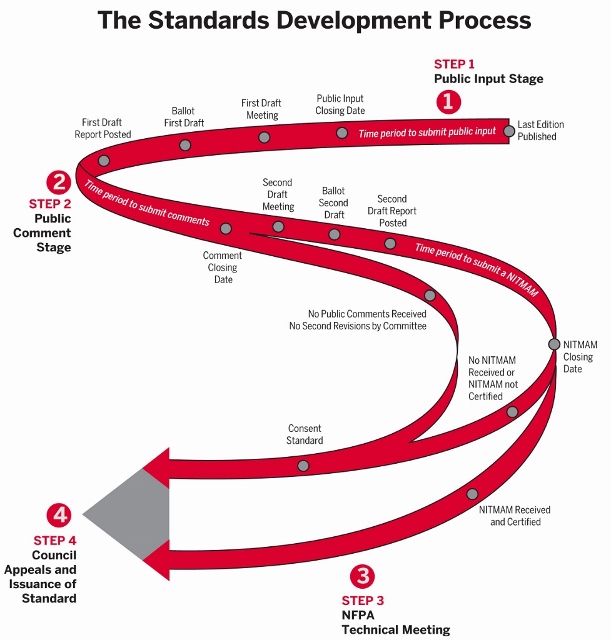
Public consultation on the 2023 revision closed January 5, 2022 however the NITMAM process permits additional comment at the 2023 NFPA Annual meeting in Las Vegas in June 2023.

The 2026 Edition is now open for public input until January 4, 2024.

Public Comment on the First Draft of the 2026 Edition will be received until January 3, 2025

As always, we encourage direct participation by user-interests supporting the education facility industry.   You may do so by CLICKING HERE.

It is never a bad idea to key in comments on your own but if you would like some insight into our advocacy vectors since 2008 you are welcomed to click in our periodic Risk and Public Safety colloquia during which time we pick through technical, policy and enforcement specifics.   We have been hammering on Chapters 11 and 12, Education and Healthcare Facilities, respectively; for five cycles.   See our CALENDAR for the next online meeting; open to everyone.


Issue: [10-3], [11-58], [14-44] and [16-127]

Category: Electrical, Telecommunications, Information & Communications Technology, Public Safety, Risk Management, #SmartCampus

Colleagues: Mike Anthony, Jim Harvey, Richard Robben


More

Department of Homeland Security: K-12 School Security

National Campus Safety and Security Project

NFPA 730 2023 Public Input Report

NFPA 730 730_F2019_PMM_AAA_FD_PIresponses

NFPA 730_F2019_PMM_AAA_SD_PCresponses

ARCHIVE / NFPA 730 Guide to Premises Security


Arenas, Lecture Halls & Theaters

National Fire Protection Association | 2022 Revenue $82M

2026 NEC Code Panel 15 Public Input Report with Committee Response

Note in the transcript above that the four proposals submitted by Standards Michigan relate to healthcare facilities.  Code Panel 15 receives proposals for healthcare and assembly occupancy wiring safety concepts.

Marcel Jambon for an 1895 Paris production of Giuseppe Verdi’s Otello.

The standard of care for electrical system safety in dramatic art facilities in the education, and other industries, is largely established in Articles 518 through Article 540 of the National Electrical Code (NEC).   In some instances, dramatic art activity takes place in athletic arenas so we are mindful of parent standards for assembly occupancies generally; found in Chapter 3 of the International Building Code.

Free public access to the current 2023edition of the NEC is linked below:

2023 National Electrical Code

Of particular interest is the “technical power system” found in Article 640: Audio Signal Processing, Amplification, and Reproduction Equipment.

Access to the International Building Code on “related” occupancies is linked below (Chapter 3 Occupancy Classification and Use):

2021 International Building Code

Note the imperfect correlation between the NFPA and ICC occupancy definitions.  This never happens by design but is sometimes necessary.  Some risk aggregations have to be understood as terms of art; to be understood by seasoned experts in context.  Also, keep in mind that the NEC is a wiring installation safety code.

Proposals for revisions to assembly-related installations in the for 2023 is linked below:

NFPA 70 Public Input Report for 2023 Assembly Occupancies 

Second Draft Report for all articles assigned to CMP-15

The so called “song and dance” sections of the NEC have been fairly “stable” in recent cycles.  Changes to these articles in the NEC 2020 revision are incremental — i.e clarifications on grounding, wiring methods, cord wiring, illumination — and helpful for designers and inspectors.  Nothing budget busting.   Convergence of fire safety, mass notification,  environmental air and visual experiences continues as once-independent technologies continue integration.

2026 National Electrical Code Workspace


We collaborate with the IEEE Education & Healthcare Facilities Committee which meets 4 times monthly in Europe and the Americas.   See our CALENDAR for the next online teleconferences; open to everyone.

Issue: [Various]

Category: Sport, Electrical, Telecommunications, Fire Protection, Arts & Entertainment Facilities, Lively Art

Colleagues: Mike Anthony, Matt Dozier, Jim Harvey


LEARN MORE:

BS 7827_2011 – Code of practice for designing, specifying, maintaining and operating emergency sound systems at sports venues

Requirements for Hybrid Media Production

Digital Content Production

Archive / Places of Assembly, Lecture Halls & Theaters

Fire Protection for Laboratories Using Chemicals

Because of the robustness of the environmental safety units in academia we place this title in the middle of our stack of priorities. Laboratory safety units are generally very well financed because of the significance of the revenue stream they produce.  We place higher priority on standby power systems to the equipment and, in many cases, the subjects (frequently animals)

Chemical laboratory, Paris. 1760


We were advocating #TotalCostofOwnership concepts in this document before our work was interrupted by the October 2016 reorganization (See ABOUT).   Some of that work was lost so it may be wise to simply start fresh again, ahead of today’s monthly teleconference on laboratory safety codes and standards.  The scope of NFPA 45 Standard on Fire Protection for Laboratories Using Chemicals is very large and articulated so we direct you to its home page.

Suffice to say that the conditions under which NFPA 45 may be applied is present in many schools, colleges and universities — both for instructional as well as academic research purposes.  Some areas of interest:

  • Laboratory Unit Hazard Classification
  • Laboratory Unit Design and Construction
  • Laboratory Ventilating Systems and Hood Requirements
  • Educational and Instructional Laboratory Operations

We find considerable interaction with consensus documents produced by the ICC, ASHRAE and NSF International.

It is noteworthy that there are many user-interest technical committee members on this committee from the State University of New York, the University of Kentucky, West Virginia University, the University of Texas, University of California Berkeley and the University of Texas San Antonio; thereby making it one of only a few ANSI accredited standards with a strong user-interest voice from the education.  Most of them are conformance/inspection interest — i.e. less interested in cost reduction — but they are present nonetheless.  We pick our battles.

The 2023 revision is in an advanced stage of development and on the agenda of the June 2023 Technical Standards Agenda.  It will likely be approved for release to the public later this year.

We always encourage direct participation.  You may communicate directly with Sarah Caldwell or Laura Moreno at the National Fire Protection Association, One Batterymarch Park, Quincy, MA 02169-7471 United States.  TEL: 1 800 344-3555 (U.S. & Canada); +1 617 770-3000 (International)

This standard is on the standing agenda of our periodic Laboratory standards teleconference.  See our CALENDAR for the next online meeting; open to anyone.
Issue: [19-60]

Category: Prometheus, Laboratory, Risk

Colleagues: Richard Robben, Mark Schaufele


Pool, Fountain, Agriculture & Water Infrastructure Electrical Safety

2026 National Electrical Code Workspace

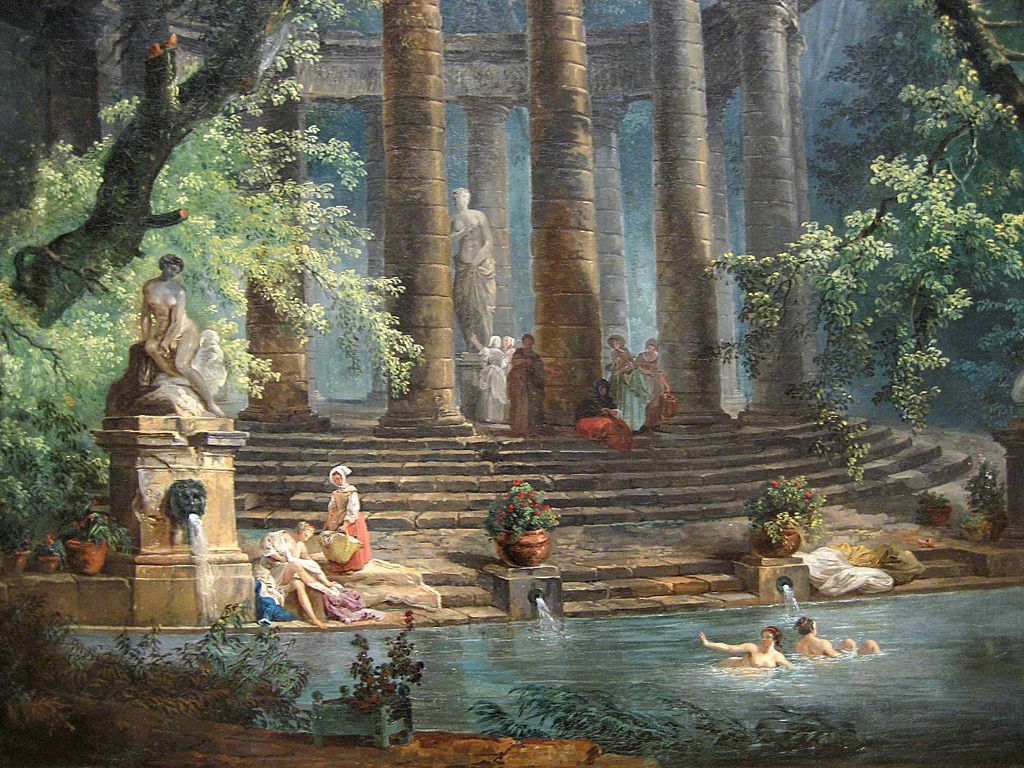
“The Bathing Pool” / Hubert Robert (French, 1733–1808) / Gift of J.P. Morgan

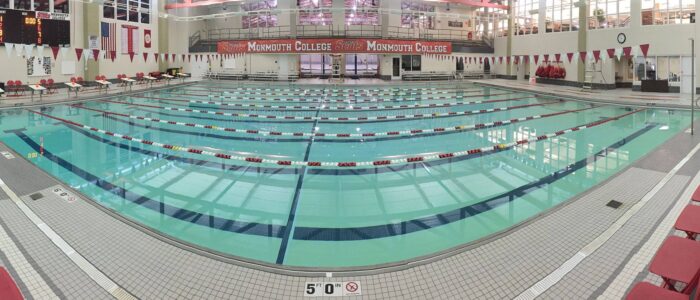
Education communities have significant assets tied up in swimming pools, immersion pools, fountains, hydro-therapy installations (in hospitals and athletic training facilities) and flood control facilities (in congested, non-permeable parts of urban campuses) we have been keeping an eye on leading practice discovery for these installations in the 2020 National Electrical Code.

With electrical safety — i.e. shock protection — as the focus of this post*, the relevant parts of the 2020 NEC reside in Articles 680 and 682 are described below:
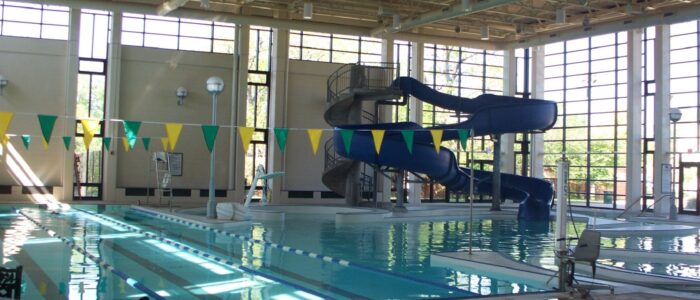
Article 680 applies to the construction and installation of electrical wiring for, and equipment in or adjacent all swimming, wading, therapeutic and decorative pools, fountains, hot tubs, spas and hydromassage bathtubs, whether permanently installed or storable, and to metallic auxiliary equipment, such as pumps, filters, and similar equipment.  The term body of water used throughout Part I applies to all bodies of water covered in this scope unless otherwise amended.

Article 682 applies to the installation of electrical wiring for, and the equipment in and adjacent to, natural or artificially made bodies of water not covered by other articles in the NEC, such as, but not limited to aeration ponds, fish farm ponds, storm retention basins, treatment ponds and irrigation (channel facilities.   Water depths may vary seasonally or be controlled.

When the 2020 NEC is released there will be hundreds (more like thousands) of experts who make their living on each NEC revision fanning out across the globe able and ready to interpret, advise and train.  We are not primarily a code training enterprise but we do get down into the weeds of electrical safety technical discussion where leading practice discovery discussion is recorded:

2020 NEC Article 680-682 Public Input | Pages 240 – 501

2020 NEC Articles 680-682 First Draft Report | Page 59 – 152

2020 NEC Articles 680-682 Public Comment Report

2020 NEC Articles 680-682 Second Draft Final Ballot

Transcripts superseded.  We refer to the 2026 Workspace linked at the top of this page.

We find interest in corrosion control, water bottle fill stations, water heating technologies, LED illumination as well as the usual editorial, correlation and concepts movement between articles.  From these transcripts it should also be plain that grounding and bonding practice, GFCI protection, luminaire location and wiring, corrosion management continue to be of primary interest in electrical safety assurance.   Related safety concepts appear in NFPA 70B and NFPA 70E.   Anything having to do with water; or the areas around water, are regions of elevated risk.

We are happy to discuss electrical safety standards any day at 11 AM Eastern time and host a monthly breakout teleconference dedicated to Electrical Power Safety in education facilities.  See our CALENDAR for the next online meeting.  We also collaborate closely with the IEEE Education & Healthcare Facilities Committee which meets online four times monthly in European and American time zones.

Issue: [16-102]

Category: Electrical, Risk Management, Water,

Colleagues: Mike Anthony, Jim Harvey, Kane Howard

*We leave the technical specifics of footcandle distribution to another, future post.


LEARN MORE:

2017 NEC changes for electrical safety in swimming pools

2020 NEC Changes (All Articles)


Reconditioned Electrical Equipment

We have been following an international conversation on the safe and effective application of reconditioned electrical equipment (RCEE) for the better part of ten years now.   Threads of the conversation originating in consensus documents developed by the International Electrotechnical Commission, the CSA Group, the National Association of Electrical Equipment and Medical Imaging Manufacturers (NEMA) and others.   The safe and practical application of reconditioned electrical equipment — though not necessarily economical — is debated in detail in the  National Electrical Code (NEC);  a document in which we have advocated for the education facilities industry since 1993.

Not all electrical equipment is suitable for reconditioning but enough of it can such that specification of RCEE significantly lowers #TotalCostofOwnership for the $300 billion education facilities industry in the United States; the primary goal of Standards Michigan and its 50-state affiliates.  According to the National Electrical Manufacturers Association, the following RCEE is suitable:

  • Industrial and commercial panel boards
  • Low and medium voltage power circuit breakers
  • Low and medium voltage replaceable link fuses
  • Low voltage switchgear
  • Manual and magnetic controllers
  • Medium voltage switchgear
  • Metallic conduit, tubing, raceways and fittings
  • Motor control centers
  • Motors
  • Switchboards
  • Uninterruptible Power Supply Equipment

The length of this list is a topic upon which good minds disagree; especially internationally.   Whether or not the largest non-residential building construction market in the United States (with new construction running at a clip of $80 billion annually) takes advantage of developments in technology that help manufacturers effectively “re-cycle” the largest components of a building power chain is a discussion for another day.    The IEEE Education & Healthcare Facilities Committee drills down into details of this nature and is now soliciting comment on the proposed actions of IEEE SCC-18; the IEEE committee which, by charter, is aligned with user-interests in the US standards system.  As we explain in our ABOUT,  the general public — and even many industry insiders —  are not aware of the economic consequences to all industries when regulatory products are written only by incumbent interests.

Suffice to say that even if the US education facilities industry does not apply RCEE to reduce the cost of a new building (by about 1 percent) its competitors internationally will and are.

The 2020 NEC is nearing the completion of its revision cycle.   A milestone was completed in early November when all of the 20-0dd technical committees in San Diego.   Dozens of breakout task groups are forming to sort through public response to proposed changes to the 2017 NEC which will become the 2020 NEC this time next year.   Proposals regarding RCEE landed on the agenda of nearly all 20-odd NEC technical committees.   Standards Michigan has tenure in Code Making Panel 1, the committee with oversight about how all other technical committees determine the safe and practical application of RCEE.

Cutting to the chase then, linked below is the first of several transcripts that track CMP-1 debate:

NFPA 70 National Electrical Code Workspace

Admittedly, very technical stuff.   Few will pay attention to these specifics until something bad happens (perhaps six years from now) so, to avoid something bad happening, we pay attention to it now.   We always collaborate with IEEE JTC/PES/IAS and IEEE E&H Committee which meets online twice every month. 

Issue: [16-102]

Category: Electrical, #SmartCampus

Colleagues: Mike Anthony,  Robert G. Arno, Neal Dowling, James R. Harvey, Richard Robben

Readings / Evaluating Water-Damaged Electrical Equipment


Layout mode
Predefined Skins
Custom Colors
Choose your skin color
Patterns Background
Images Background
Standards Michigan
error: Content is protected !!
Skip to content