
Category Archives: @NFPA

Loading
loading...

Lightning Protection Systems

2026 Public Input Report | 2026 Public Comment Report

FEMA National Risk Index: Lightning

“Benjamin Franklin Drawing Electricity from the Sky” 1816 Benjamin West


Benjamin Franklin conducted his famous experiment with lightning on June 10, 1752.

He used a kite and a key to demonstrate that lightning was a form of electricity.

This experiment marked an important milestone in understanding the nature of electricity

and laid the foundation for the development of lightning rods and other lightning protection systems.


Seasonal extreme weather patterns in the United States, resulting in damages to education facilities and delays in outdoor athletic events — track meets; lacrosse games, swimming pool closures and the like — inspire a revisit of the relevant standards for the systems that contribute to safety from injury and physical damage to buildings: NFPA 780 Standard for the Installation of Lightning Protection Systems

FREE ACCESS

To paraphrase the NFPA 780 prospectus:

  • This document shall cover traditional lightning protection system installation requirements for the following:
       (1) Ordinary structures

       (2) Miscellaneous structures and special occupancies
       (3) Heavy-duty stacks
       (4) Structures containing flammable vapors, flammable gases, or liquids with flammable vapors
       (5) Structures housing explosive materials
       (6) Wind turbines
       (7) Watercraft
       (8) Airfield lighting circuits
       (9) Solar arrays
  • This document shall address lightning protection of the structure but not the equipment or installation requirements for electric generating, transmission, and distribution systems except as given in Chapter 9 and Chapter 12.

(Electric generating facilities whose primary purpose is to generate electric power are excluded from this standard with regard to generation, transmission, and distribution of power.  Most electrical utilities have standards covering the protection of their facilities and equipment. Installations not directly related to those areas and structures housing such installations can be protected against lightning by the provisions of this standard.)

  • This document shall not cover lightning protection system installation requirements for early streamer emission systems or charge dissipation systems.

“Down conductors” must be at least #2 AWG copper (0 AWG aluminum) for Class I materials in structures less than 75-ft in height

“Down conductors: must be at least 00 AWG copper (0000 AWG aluminum) for Class II Materials in structures greater than 75-ft in height.

Related grounding and bonding  requirements appears in Chapters 2 and Chapter 3 of NFPA 70 National Electrical Code.  This standard does not establish evacuation criteria.  

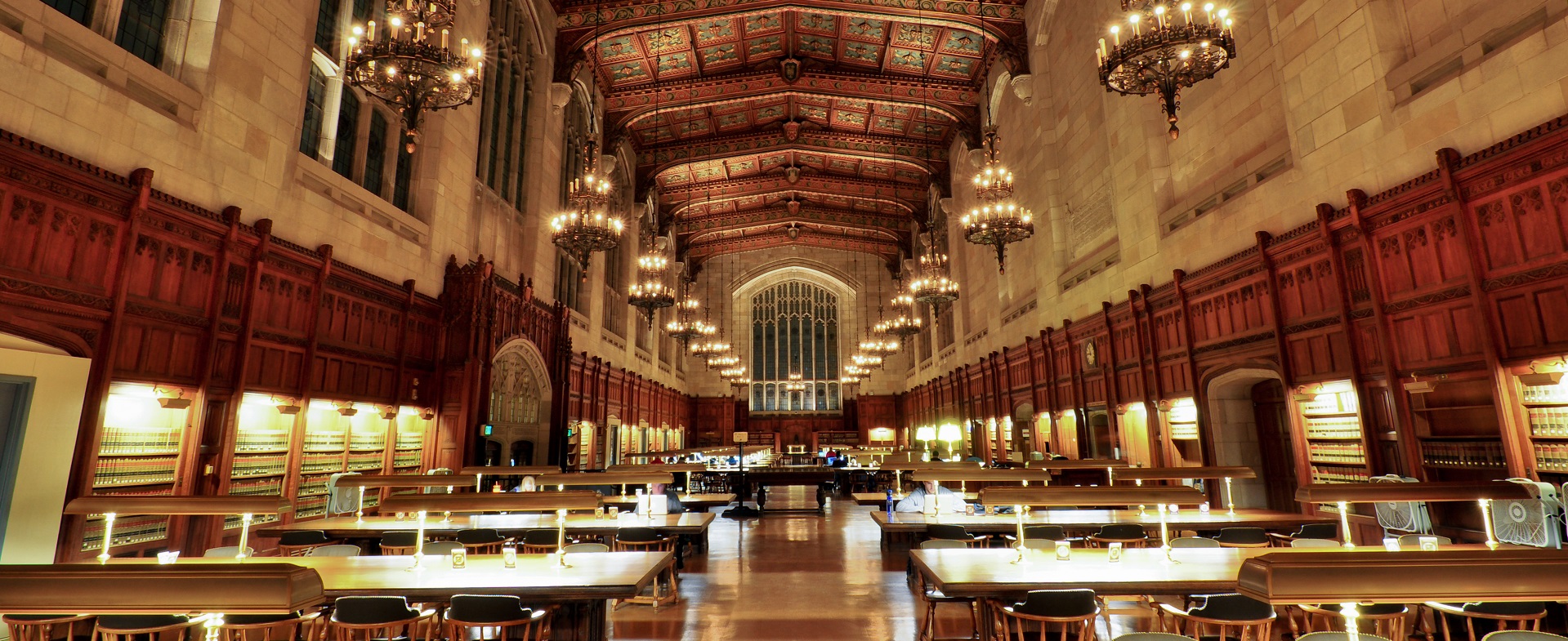
University of Michigan | Washtenaw County (Photo by Kai Petainen)

The current edition is dated 2023 and, from the transcripts, you can observe concern about solar power and early emission streamer technologies tracking through the committee decision making.  Education communities have significant activity in wide-open spaces; hence our attention to technical specifics.

2023 Public Input Report

2023 Public Comment Report

Public input on the 2026 revision is receivable until 1 June 2023.

We always encourage our colleagues to key in their own ideas into the NFPA public input facility (CLICK HERE).   We maintain NFPA 780 on our Power colloquia which collaborates with IEEE four times monthly in European and American time zones.  See our CALENDAR for the next online meeting; open to everyone.

Lightning flash density – 12 hourly averages over the year (NASA OTD/LIS) This shows that lightning is much more frequent in summer than in winter, and from noon to midnight compared to midnight to noon.

Issue: [14-105]

Category: Electrical, Telecommunication, Public Safety, Risk Management

Colleagues: Mike Anthony, Jim Harvey, Kane Howard


More

Installing lightning protection system for your facility in 3 Steps (Surge Protection)

IEEE Education & Healthcare Facility Electrotechnology

Readings: The “30-30” Rule for Outdoor Athletic Events Lightning Hazard

Churches and chapels are more susceptible to lightning damage due to their height and design. Consider:

Height: Taller structures are more likely to be struck by lightning because they are closer to the cloud base where lightning originates.

Location: If a church or chapel is situated in an area with frequent thunderstorms, it will have a higher likelihood of being struck by lightning.

Construction Materials: The materials used in the construction of the building can affect its vulnerability. Metal structures, for instance, can conduct lightning strikes more readily than non-metallic materials.

Proximity to Other Structures: If the church or chapel is located near other taller structures like trees, utility poles, or buildings, it could increase the chances of lightning seeking a path through these objects before reaching the building.

Lightning Protection Systems: Installing lightning rods and other lightning protection systems can help to divert lightning strikes away from the structure, reducing the risk of damage.

Maintenance: Regular maintenance of lightning protection systems is essential to ensure their effectiveness. Neglecting maintenance could result in increased susceptibility to lightning damage.

Historical Significance: Older buildings might lack modern lightning protection systems, making them more vulnerable to lightning strikes.

The risk can be mitigated by proper design, installation of lightning protection systems, and regular maintenance. 
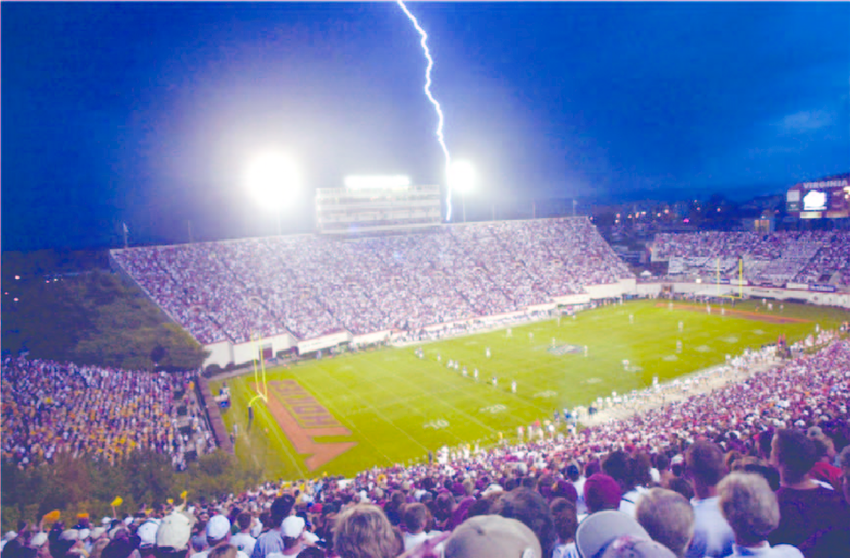
Virginia Tech

Installation of Air-Conditioning and Ventilating Systems

Design, construction, operation and maintenance of environmental air, piping and drainage systems is one of the largest cost centers in education facilities.  We find subtle tradeoffs between fire safety, energy conservation and indoor air quality goals.   With solid data and enlightened debate which include the user-interest (the final fiduciary in the education facility industry, for example) those tradeoffs are reconciled by technical committees administered by three ANSI-accredited standards developers:

American Society of Heating and Refrigeration Engineers (ASHRAE)

American Society of Mechanical Engineers (ASME)

IAPMO Group (IAPMO)

National Fire Protection Association (NFPA)

Sheet Metal & Air Conditioning Contractors National Association

Today we focus on the leading safety practice of NFPA 90A Standard for the Installation of Air-Conditioning and Ventilating Systems.  From the NFPA 90A prospectus:

[NFPA 90A] shall cover construction, installation, operation, and maintenance of systems for air conditioning and ventilating, including filters, ducts, and related equipment, to protect life and property from fire, smoke, and gases resulting from fire or from conditions having manifestations similar to fire.

[Explanation A.1.1] An air duct system has the potential to convey smoke, hot gases, and flame from area to area and to supply air to aid combustion in the fire area. For these reasons, fire protection of an air duct system is essential to safety to life and the protection of property. However, an air duct system’s fire integrity also enables it to be used as part of a building’s fire protection system. Guidance for the design of smoke-control systems is provided in NFPA 92, Standard for Smoke Control Systems. Pertinent information on maintenance is provided in Annex B. Maintenance of fire dampers, ceiling dampers, smoke dampers, and combination fire/smoke dampers requirements can be found in NFPA 80, Standard for Fire Doors and Other Opening Protectives, and NFPA 105, Standard for Smoke Door Assemblies and Other Opening Protectives.

The original University of Michigan codes and standards advocacy enterprise spoke loud and clear about duct smoke detector application, control signaling and maintenance requirements from the user point of view.   Owing to the re-organization we missed the 2018 revision but we are now recovering from where we left off for the 2021 revision.

The First Draft Report for the 2021 edition is linked below:

First Draft Ballot / Final Results

90A_A2020_AIC_AAA_SD_PCResponses

NFPA 90A is heavily referenced in an interlocking matrix of related fire safety consensus products but it is not very lengthy document.   We include it on the standing agenda of our periodic Mechanical and Prometheus Bound teleconference.  See our CALENDAR for the next online meeting.


Issue: [13-118]

Category: Fire Protection, Mechanical

Colleagues: Mike Anthony, Richard Robben, Larry Spielvogel

:


Branch and Feeder Circuit Design

FREE ACCESS 2026 National Electrical Code

Branch circuits relevant to modular classroom buildings are primarily addressed in Article 120: Branch Circuits (formerly Article 210 in previous editions). This article covers requirements for branch-circuit sizing, overcurrent protection, outlets, and general installation rules for circuits up to 1000 volts AC or 1500 volts DC.  Key sections include:120.19: Conductor sizing and derating.

120.20: Overcurrent protection.
120.21: Receptacle outlets and tamper-resistant requirements.
120.23: Specific rules for appliances and fixed equipment.

For outside branch circuits, see Article 267: Outside Branch Circuits and Feeders over 1000 Volts AC or 1500 Volts DC, Nominal (if applicable to higher voltages).Feeder Circuit RulesFeeder circuits are primarily addressed in Article 121: Feeders (formerly Article 215 in previous editions). This article details feeder conductor sizing, grounding, and disconnecting means for circuits supplying branch circuits or sub-feeders up to 1000 volts AC or 1500 volts DC.Key sections include:121.2: Minimum rating and sizing.

121.3: Overcurrent protection.
121.4: Feeders as branch circuits (when applicable).

Outside feeders are covered in Article 267: Outside Branch Circuits and Feeders over 1000 Volts AC or 1500 Volts DC, Nominal (for higher voltages) or cross-referenced in Article 267 for general outside installations.

For modular school buildings detached from the main building with pre-installed single or three phase wiring systems, designers must choose between a separate service drop from a merchant utility or tapping into an existing source from the nearby school building.

Compact Muon Solenoid / European Organization for Nuclear Research

Modular classroom buildings, often prefabricated and portable, require special attention in electrical power design to ensure safety, compliance, and functionality. The 2026 National Electrical Code (NEC) emphasizes proper sizing of branch circuits (Article 120) and feeders (Article 121) based on load calculations (Article 122), accounting for lighting, HVAC, and technology demands. Designers must consider temporary or relocatable installations, ensuring grounding and bonding comply with Article 250 for safety. Flexible wiring methods, like cord-and-plug connections, may be needed for portability, per Article 400. Modular units often face environmental challenges, requiring weather-resistant materials and equipment (Article 110). Surge protection (Article 285) is critical to safeguard sensitive classroom electronics. Accessibility for maintenance and inspections, per Article 110.26, is vital due to compact designs. Finally, compliance with local codes and coordination with utility connections ensure reliable power delivery for educational environments.


We have tried for several cycles to change the “Type of Occupancy” listing in NEC Table 220.12 to reflect more granular definition for School/university and Sports arena lighting load calculations. We will have another chance in the 2026 NEC. [Public input is due September 10th]

  • Public Input Closing Date: September 7, 2023


4 February 2021


Let’s start marking up the 2023 National Electrical Code, shall we?   We will collaborate with IEEE Standards Coordinating Committee 18 — the committee that follows NFPA electrical safety consensus products and coordinates the response of IEEE electrical power professionals.

A good place to start is with the transcripts of the 2020 revision — AVAILABLE  HERE for free.   We look for proposals that failed for one reason or another; holding fast to our hunch that changes to the ampere load requirements that appear in the prescriptive statements to designers and inspectors of Chapter 2 could changed.   The 2020 transcripts of Code-Making Panel 4 are linked below:

Code‐Making Panel 2 Public Input Report (991 Pages)

Code-Making Panel 2 Public Comment Report (402 Pages)

We have been trying for several NEC revision cycles to change the “Type of Occupancy” tabulations of Table 220.12 to reflect more granular definition in the Volt/Ampere requirement of 33 VA/m2 (3 VA/ft2) for School/university and Sports arena.   Some of the problem in Table 220.12 regarding electrical loads in education facilities lies in its foundation built upon the International Building Code; the remainder of the problem lies with the education facility industry itself; described in detail in our ABOUT.

The good news is that the NFPA Fire Protection Research Foundation (FPRF) recognizes the problem and is acting on it; described in previous posts and in its project portfolio.  Keep in mind that Standards Michigan, the original voice of the user-interest for education facility industry in the global standards system, has to compete with other, competitor stakeholders who make their market in this and in other consensus products accredited by the American National Standards Institute.

Public input for the 2023 National Electrical Code is due September 10th.    We will collaborate with the FPRF and the IEEE Education & Healthcare Facilities Committee, and others, to get informed public input to Code-Making Panel 2 and the NEC Technical Correlating Committee.   See our CALENDAR for our next Electrical & Telecommunication teleconference, open to everyone.

Issue: [19-201]

Category: Electrical

Colleagues: Mike Anthony, Scott Gibb, Jim Harvey, Kane Howard, Paul Kempf, Philip Ling, Jose Meijer


LEARN MORE:

IEEE Industrial Applications Society: The safety and economic benefit of reduced power design densities permitted in the 2014 National Electrical Code (Anthony, Ling, Meijer)


Fire Protection Research Institute | Evaluation of Electrical Feeder and Branch Circuit Loading

Originally posted October 16, 2016

University of Michigan Law School

With thanks to Richard Robben, President of True North Facility Management, the pledges to fund the NFPA Fire Protection Foundation Project: Evaluation of Electrical Feeder and Branch Circuit Loading accumulated to the requisite $24,000 to begin Phase I of two phases of a project originally begun by the University of Michigan to bring the National Electrical Code (NFPA 70) in line with federal energy conservation regulations that incorporate by reference the International Energy Conservation Code.   

NFPA 70 is one of the most widely used standards for electrotechnology in the world.   The University of Michigan began assertive advocacy on behalf of the US education industry in the NFPA suite in 1996 and that advocacy has expanded globally under two different private organizations: See About

Phase I is now completed.   The Phase I Final Report (with public comments) is available in the links below:

REPORT – Branch Circuit Loading Phase1 FINAL

SUMM – Panel Comments – Branch Circuit Loading FINAL2

In October, the project Principal Researcher, Tammy Gammon, provided an update to the NFPA Research Foundation.  Her slides are available in the link below:

NFPA Fire Protection Research Institute | Feeder & Branch Circuit Loading Evaluation | Phase I Update


We wish to thank our colleagues at Notre Dame who helped “get the ball rolling”, our colleagues in the Big Ten & Friends consortia, and forward-thinking manufacturers for their pledges:

Eaton Corporation

MIAPPA | Michigan Association of Physical Plant Administrators

Michigan State University

Ohio State University

University of Iowa

University of Minnesota

University of Nebraska

University of Texas Austin


Issue [13-33]

Contact: Mike Anthony, Jim Harvey, Richard Robben (True North, LLC); Tom Harman (University of Houston Clearwater), Kane Howard (Michigan State University), Paul Kempf (Notre Dame)

Colleagues: Robert G. Arno (Harris Corp), Joe Weber (Emerson), Casey Grant (NFPA), Larry Ayers (Independent Electrical Contractors Association)

Category: Electrical, Energy Conservation


Stationary Energy Storage Systems

Should every campus building generate its own power? Sustainability workgroups are vulnerable to speculative hype about net-zero buildings and microgrids. We remind sustainability trendsniffers that the central feature of a distributed energy resource–the eyesore known as the university steam plant–delivers most of the economic benefit of a microgrid. [Comments on Second Draft due April 29th] #StandardsMassachusetts

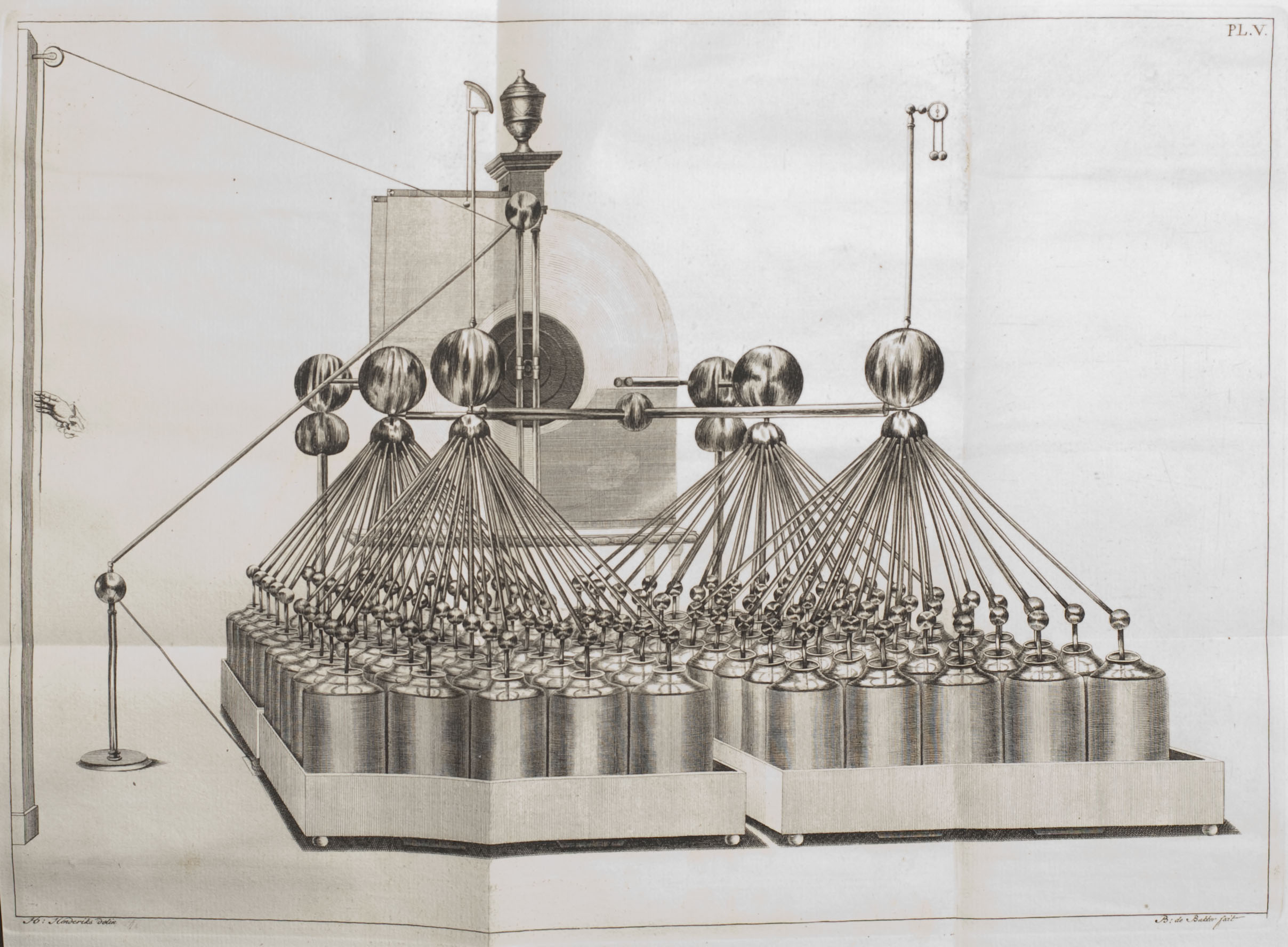
“M. van Marum. Tweede vervolg der proefneemingen gedaan met Teyler’s electrizeer-machine, 1795” | An early energy storage device | Massachusetts Institute of Technology Libraries

We have been following the developmental trajectory of a new NFPA regulatory product — NFPA 855 Standard for the Installation of Stationary Energy Storage Systems — a document with ambitions to formalize the fire safety landscape of the central feature of campus microgrids by setting criteria for minimizing the hazards associated with energy storage systems.

The fire safety of electric vehicles and the companion storage units for solar and wind power systems has been elevated in recent years with incidents with high public visibility.  The education industry needs to contribute ideas and data to what we call the emergent #SmartCampus;an electrotechnical transformation — both as a provider of new knowledge and as a user of the new knowledge.

Transcripts of technical deliberation are linked below:

2026 Public Input Report (705 pages) § 2026 Second Draft Meeting Agenda (912 pages)

Comment on the 2026 revision received by March 27, 2025 will be heard at the NFPA June 2025 Expo through NFPA’s NITMAM process.

University of Michigan | Average daily electrical load across all Ann Arbor campuses is on the order of 100 megawatts

A fair question to ask: “How is NFPA 855 going to establish the standard of care any better than the standard of care discovered and promulgated in the NFPA 70-series and the often-paired documents NFPA 110 and NFPA 111?”  (As you read the transcript of the proceedings you can see the committee tip-toeing around prospective overlaps and conflicts; never a first choice).

Suffice to say, the NFPA Standards Council has due process requirements for new committee projects and, obviously, that criteria has been met.   Market demand presents an opportunity to assemble a new committee with fresh, with new voices funded by a fresh set of stakeholders who, because they are more accustomed to advocacy in open-source and consortia standards development platforms, might have not been involved in the  more rigorous standards development processes of ANSI accredited standards developing organizations — specifically the NFPA, whose members are usually found at the top of organization charts in state and local jurisdictions.  For example we find UBER — the ride sharing company — on the technical committee.  We find another voice from Tesla Motors.  These companies are centered in an industry that does not have the tradition of leading practice discovery and promulgation that the building industry has had for the better part of two hundred years.

Our interest in this standard lies on both sides of the education industry — i.e. the academic research side and the business side.  For all practical purposes, the most credible, multi-dimensional and effective voice for lowering #TotalCostofOwnership for the emergent smart campus is found in the tenure of Standards Michigan and its collaboration with IEEE Education & Healthcare Facilities Committee (E&H).  You may join us sorting through the technical, economic and legal particulars and day at 11 AM Eastern time.   The IEEE E&H Committee meets online every other Tuesday in European and American time zones; the next meeting on March 26th.  All meetings are open to the public.

University of California San Diego Microgrid

You are encouraged to communicate directly with Brian O’Connor, the NFPA Staff Liaison for specific questions.  We have some of the answers but Brian is likely to have all of them.   CLICK HERE for the NFPA Directory.  Additionally, NFPA will be hosting its Annual Conference & Expo, June 17-20 in San Antonio, Texas; usually an auspicious time for meeting NFPA staff working on this, and other projects.

The prospect of installing of energy storage technologies at every campus building — or groups of buildings, or in regions — is clearly transformational if the education facilities industry somehow manages to find a way to drive the cost of operating and maintaining many energy storage technologies lower than the cost of operating and maintaining a single campus distributed energy resource.  The education facility industry will have to train a new cadre of microgrid technology specialists who must be comfortable working at ampere and voltage ranges on both sides of the decimal point that separates power engineers from control engineers.  And, of course, dynamic utility pricing (set by state regulatory agencies) will continue to be the most significant independent control variable.

Finding a way to make all this hang together is the legitimate work of the academic research side of the university.   We find that sustainability workgroups (and elected governing bodies) in the education industry are vulnerable to out-sized claims about microgrids and distributed energy resources; both trendy terms of art for the electrotechnical transformation we call the emergent #SmartCampus.

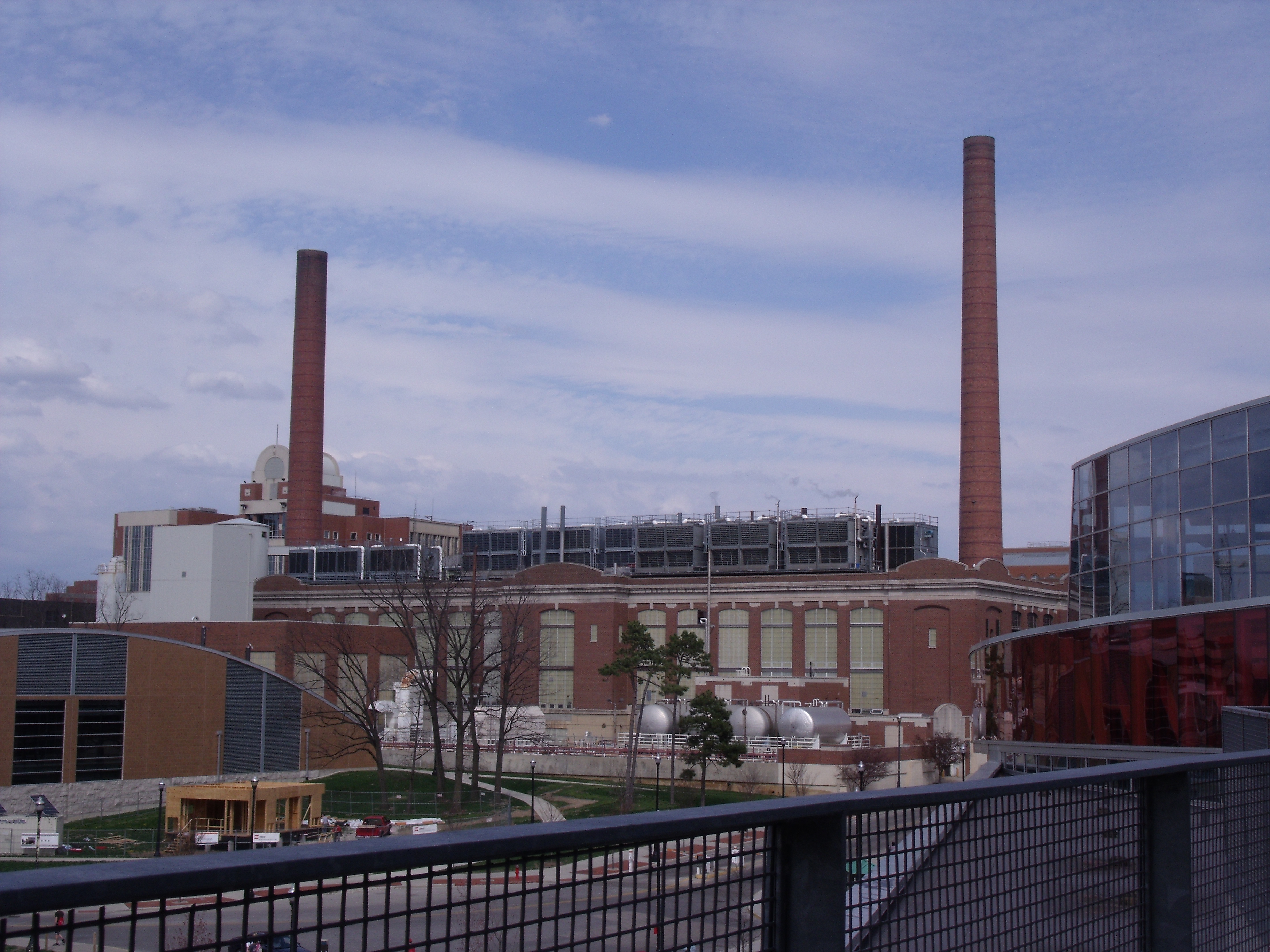
We remind sustainability trendsniffers that the central feature of a distributed energy resource — the eyesore known as the university steam plant — bears most of the characteristics of a microgrid.   In the videoclip linked below a respected voice from Ohio State University provides enlightenment on this point; even as he contributes to the discovery stream with a study unit.

Ohio State University McCracken Power Plant

Issue: [16-131]

Category:  District Energy, Electrical, Energy, Facility Asset Management, Fire Safety, Risk Management, #SmartCampus, US Department of Energy

Colleagues: Mike Anthony, Bill Cantor (wcantor@ieee.org). Mahesh Illindala

Standards MassachusettsStandards Texas, Standards Ohio

*It is noteworthy that (NFPA 70) National Electrical Code-Making Panel 1 has appropriated vehicle-to-grid installations into its scope.


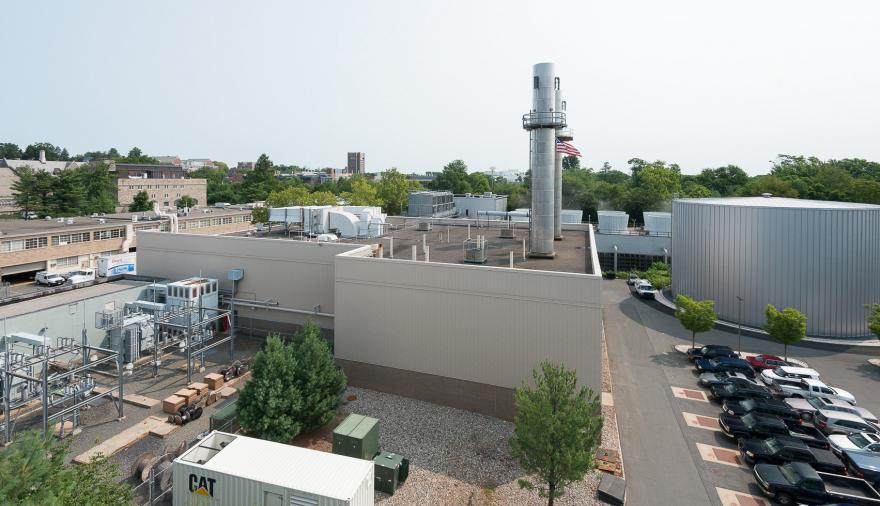
Princeton University Power Plant | Click on image

LEARN MORE:

Related Post: Electrical Safety Research Advisory Committee

Bibiography: Campus Microgrids

Higher Education Facilities Conference: The Rise of University Microgrids


Mahesh Illindala enlightens understanding of what microgrid is, and is not:


Marina & Boatyard Electrical Safety

Rowing at the 2024 Summer Olympics

“The Biglin Brothers Racing| Thomas Eakins (1872)

Rowing competition in the 2024 Olympics inspires a  revisit of NFPA 303: Fire Protection Standard for Marinas and Boatyards.  Apart from athletic competition, many colleges, universities and trade schools with academic programs are responsible for safety of facilities located on fresh and saltwater shorelines.  Other nations refer to best practice discovered and applied in the United States.   Keep in mind that, unlike other nations, the standard of care for electrical safety in the United States is driven primarily by the fire safety community.   This happens because public safety leadership falls upon the local Fire Marshall who has a budget that is widely understand and generally supported.

From the NFPA 303 scope statement:

 This standard applies to the construction and operation of marinas, boatyards, yacht clubs, boat condominiums, docking facilities associated with residential condominiums, multiple-docking facilities at multiple-family residences, and all associated piers, docks, and floats.

This standard also applies to support facilities and structures used for construction, repair, storage, hauling and launching, or fueling of vessels if fire on a pier would pose an immediate threat to these facilities, or if a fire at a referenced facility would pose an immediate threat to a docking facility.

This standard applies to marinas and facilities servicing small recreational and commercial craft, yachts, and other craft of not more than 300 gross tons.

This standard is not intended to apply to a private, noncommercial docking facility constructed or occupied for the use of the owners or residents of the associated single-family dwelling.

No requirement in this standard is to be construed as reducing applicable building, fire, and electrical codes.

The standard of care for facilities owned by educational institutions is not appreciably different from the standard of care for any other Owner except some consideration should be given to the age and training of most of the occupants — students, of course — who are a generally transient population.  Some research projects undertaken on university-owned facilities are also subject to the local adaptions of NFPA 303.  The current version of NFPA 303 is linked below:

FREE ACCESS: NFPA 303


Boathouse Row / Philadelphia

The 2021 Edition is the current edition and the next edition will be the 2025 revision.  Click on the link below to read what new ideas were running through the current edition; mostly electrical that are intended to correlate with National Electrical Code Article 555 and recent electrical safety research*:

Landing Page for the 2028 Edition

NFPA 303 Public Input Report for the 2021 Edition

Public input closing date for the 2025 Edition is June 1, 2023.   

You may submit comment directly to NFPA on this and/or any other NFPA consensus product by CLICKING HERE.  You will need to set up a (free) account.   NFPA 303 document is also on the standing agenda of our 4 times monthly collaboration with the IEEE Education & Healthcare Facilities Committee.  See our CALENDAR for the next online colloquium; open to everyone.

Michigan Technological University

Issue: [16-133]

Category: Electrical, #SmartCampus, Facility Asset Management

Colleagues: Mike Anthony,  Jim Harvey


LEARN MORE:

* Marina Risk Reduction

NFPA 70 National Electrical Code (Article 555)

Examining the Risk of Electric Shock Drowning (ESD) As a Function of Water Conductivity

Critical Operations Power Systems

Disaster 500


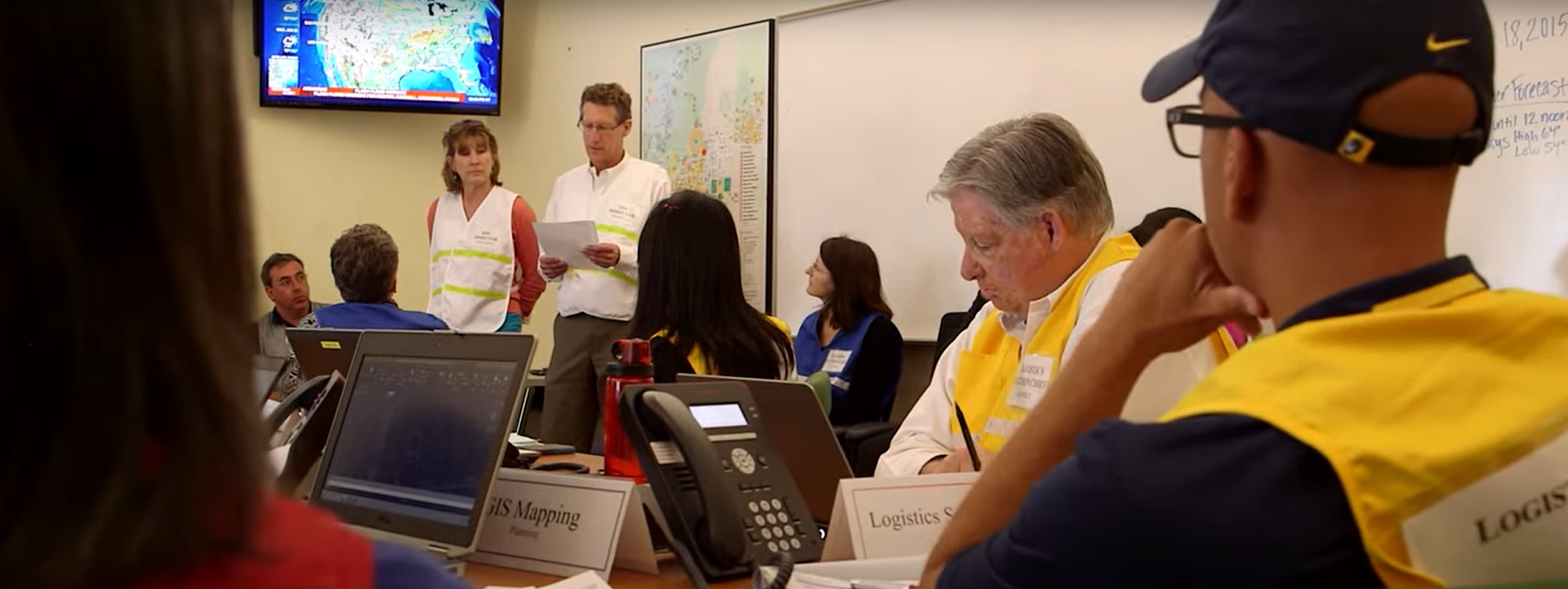
The original University of Michigan codes and standards enterprise advocated actively in Article 708 Critical Operations Power Systems (COPS) of the National Electrical Code (NEC) because of the elevated likelihood that the education facility industry managed assets that were likely candidates for designation critical operations areas by emergency management authorities.

Because the NEC is incorporated by reference into most state and local electrical safety laws, it saw the possibility that some colleges and universities — particularly large research universities with independent power plants, telecommunications systems and large hospitals  — would be on the receiving end of an unfunded mandate.   Many education facilities are identified by the Federal Emergency Management Association as community storm shelters, for example.

As managers of publicly owned assets, University of Michigan Plant Operations had no objection to rising to the challenge of using publicly owned education facilities for emergency preparedness and disaster recovery operations; only that meeting the power system reliability requirements to the emergency management command centers would likely cost more than anyone imagined — especially at the University Hospital and the Public Safety Department facilities.  Budgets would have to be prepared to make critical operations power systems (COPS) resistant to fire and flood damages; for example.

Collaboration with the Institute of Electrical and Electronic Engineers Industrial Applications Society began shortly after the release of the 2007 NEC.  Engineering studies were undertaken, papers were published (see links below) and the inspiration for the IEEE Education & Healthcare Facilities Committee developed to provide a gathering place for power, telecommunication and energy professionals to discover and promulgate leading practice.   That committee is now formally a part of IEEE and collaborates with IAS/PES JTCC assigned the task of harmonizing NFPA and IEEE electrical safety and sustainability consensus documents (codes, standards, guidelines and recommended practices.

Transcripts of 2026 Revision:

Public Input Report CMP-13

Public Comment Report CMP-13


The transcript of NEC Code Making Panel 13 — the committee that revises COPS Article 708 every three years — is linked below:

NEC CMP-13 First Draft Balloting

NEC CMP-13 Second Draft Balloting

The 2023 Edition of the National Electrical Code does not contain revisions that affect #TotalCostofOwnership — only refinement of wiring installation practices when COPS are built integral to an existing building that will likely raise cost.  There are several dissenting comments to this effect and they all dissent because of cost.   Familiar battles over overcurrent coordination persist.

Our papers and proposals regarding Article 708 track a concern for power system reliability — and the lack of power  — as an inherent safety hazard.   These proposals are routinely rejected by incumbent stakeholders on NEC technical panels who do not agree that lack of power is a safety hazard.  Even if lack of power is not a safety hazard, reliability requirements do not belong in an electrical wiring installation code developed largely by electricians and fire safety inspectors.  The IEEE Education & Healthcare Facilities Committee (IEEE E&H) maintains a database on campus power outages; similar to the database used by the IEEE 1366 committees that develop reliability indices to enlighten public utility reliability regulations.

Public input on the 2026 revision to the NEC will be received until September 7th.  We have reserved a workspace for our priorities in the link below:

National Electrical Code CMP-18

Colleagues: Robert Arno, Neal Dowling, Jim Harvey


LEARN MORE:

IEEE | Critical Operations Power Systems: Improving Risk Assessment in Emergency Facilities with Reliability Engineering

Consuting-Specifying Engineer | Risk Assessments for Critical Operations Power Systems

Electrical Construction & Maintenance | Critical Operations Power Systems

International City County Management Association | Critical Operations Power Systems: Success of the Imagination

Facilities Manager | Critical Operations Power Systems: The Generator in Your Backyard

Electric Vehicle Power Transfer System

Updated July 15, 2025


2026 National Electrical Code Table of Contents

2026 NEC First Draft: How Did We Get Here?

2029 National Electrical Code

Public Input Transcript: First Draft | Public Comment Transcript: Second Draft


2023 National Electrical CodeCurrent Issues and Recent Research


National Electrical Code CMP-18


August 5, 2021

The 2020 National Electrical Code (NEC) contains significant revisions to Article 625 Electric Vehicle Power Transfer Systems.  Free access to this information is linked below:

2023 National Electrical Code

2020 National Electrical Code

You will need to set up a (free) account to view Article 625 or you may join our colloquium today.

Public input for the 2023 Edition of the NEC has already been received.  The work of the assigned committee — Code Making Panel 12 — is linked below:

NFPA 70_A2022_NEC_P12_FD_PIReport_rev

Mighty spirited debate.   Wireless charging from in-ground facilities employing magnetic resonance are noteworthy.  Other Relevant Articles:

  • Article 240: Overcurrent Protection: This article includes requirements for overcurrent protection devices that could be relevant for EV charging systems.
  • Article 210: Branch Circuits: General requirements for branch circuits, which can include circuits dedicated to EVSE.
  • Article 220: Load Calculations: Guidelines for calculating the electrical load for EVSE installations.
  • Article 230: Services: General requirements for electrical service installations, which can be relevant for EVSE.
  • Article 250: Grounding and Bonding: Requirements for grounding and bonding, which are critical for safety in EVSE installations.


Technical committees meet November – January to respond.   In the intervening time it is helpful  break down the ideas that were in play last cycle.  The links below provide the access point:

Public Input Report Panel 12

Public Comment Report Panel 12

Panel 12 Final Ballot

We find a fair amount of administrative and harmonization action; fairly common in any revision cycle.   We have taken an interest in a few specific concepts that track in academic research construction industry literature:

  • Correlation with Underwriters Laboratory product standards
  • Bi-Directional Charging & Demand Response
  • Connection to interactive power sources

As a wiring safety installation code — with a large installer and inspection constituency — the NEC is usually the starting point for designing the power chain to electric vehicles.   There is close coupling between the NEC and product conformance organizations identified by NIST as Nationally Recognized Testing Laboratories; the subject of a separate post.

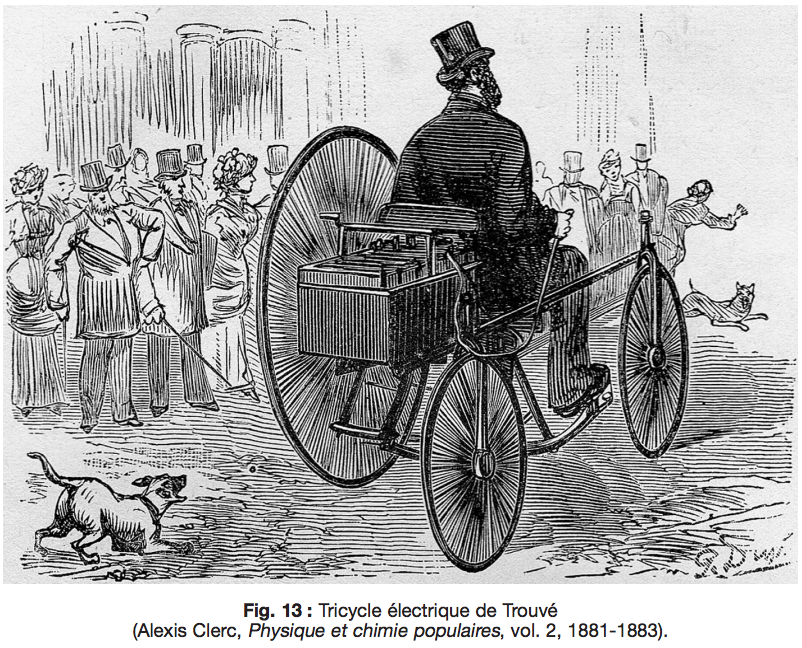
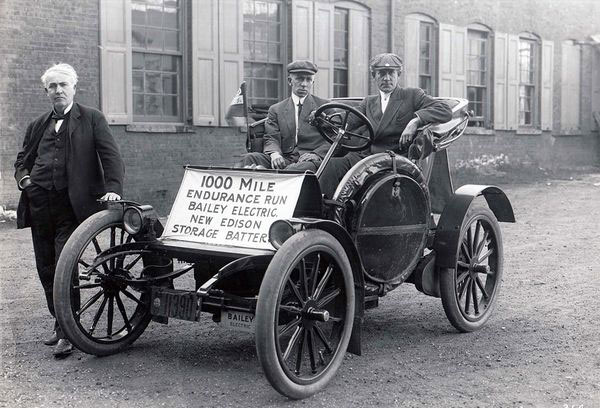
Edison electric vehicle | National Park Service, US Department of the Interior

After the First Draft is released June 28th public comment is receivable until August 19th.

We typically do not duplicate the work of the 10’s of thousands of National Electrical Code instructors who will be fanning out across the nation to host training sessions for electrical professionals whose license requires mandatory continuing education.  That space has been a crowded space for decades.   Instead we co-host “transcript reading” sessions with the IEEE Education & Healthcare Facilities Committee to sort through specifics of the 2020 NEC and to develop some of the ideas that ran through 2020 proposals but did not make it to final ballot and which we are likely to see on the docket of the 2023 NEC revision.   That committee meets online 4 times monthly.  We also include Article 625 on the standing agenda of our Mobility colloquium; open to everyone.   See our CALENDAR for the next online meeting

Issue: [16-102]

Category: Electrical, Transportation & Parking, Energy

Colleagues: Mike Anthony, Jim Harvey

Workspace / NFPA


More

U.S. NATIONAL ELECTRIC VEHICLE SAFETY STANDARDS SUMMIT | DETROIT, MICHIGAN 2010

Gallery: Electric Vehicle Fire Risk


Solarvoltaic PV Systems

“Icarus” Joos de Momper

National Electrical Code Articles 690 and 691 provide electrical installation requirements for Owner solarvoltaic PV systems that fall under local electrical safety regulations.  Access to the 2023 Edition is linked below;

2023 National Electrical Code

2026 National Electrical Code Second Draft Transcript | CMP-4

Insight into the technical problems managed in the 2023 edition can be seen in the developmental transcripts linked below:

Panel 4  Public Input Report (869 pages)

Panel 4  Second Draft Comment Report (199 pages)

The IEEE Joint IAS/PES (Industrial Applications Society & Power and Energy Society) has one vote on this 21-member committee; the only pure “User-Interest” we describe in our ABOUT.  All other voting representatives on this committee represent market incumbents or are proxies for market incumbents; also described in our ABOUT.

The 2026 National Electrical Code has entered its revision cycle.  Public input is due September 7th.

We maintain these articles, and all other articles related to “renewable” energy, on the standing agenda of our Power and Solar colloquia which anyone may join with the login credentials at the upper right of our home page.   We work close coupled with the IEEE Education & Healthcare Facilities Committee which meets 4 times monthly in American and European time zones; also open to everyone.


Code for Fireworks Display

“Fireworks over Castel Sant’Angelo in Rome” | Jacob Philipp Hackert (1775)

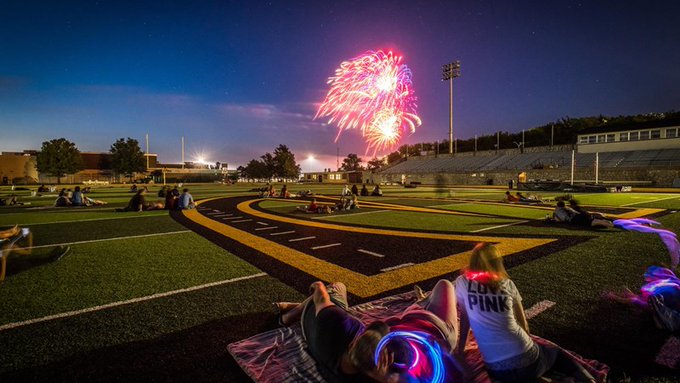
At least twice a year, and during performances with flame effects, public safety departments in colleges and universities have an elevated concern about campus citizen safety, and the safety of the host community, when fireworks are used for celebration.  We find very rigorous prohibitions against the use of fireworks, weapons and explosives on campus.  Education and enforcement usually falls on facility and operation campus safety units.

That much said, we follow development, but do not advocate in NFPA 1123 Code for Fireworks Display, because it lies among a grouping of titles that set the standard of care for many college and university public safety departments that sometimes need to craft prohibitions with consideration for the business purposes of entertainment and celebration in education facilities.   NFPA 1123 is not a long document — only 22 pages of core text — but it contains a few basic considerations for display site selection, clearances and permitting that campus public safety departments will coordinate with the host community.  It references NFPA 1126, Standard for the Use of Pyrotechnics Before a Proximate Audience and NFPA 160 Standard for the Use of Flame Effects Before an Audience.

Something to keep an eye on.  The home page for this code is linked below:

NFPA 1123 Code for Fireworks Display

For a sense of the technical discussions, transcripts of two developmental stages are linked below:

Public Input Report

Public Comment Report

Public comment on 2026 Edition proposed revisions is receivable until May 30, 2024.

We maintain this title on our periodic Prometheus colloquium.  See our CALENDAR for the next online meeting.

Issue: [16-134]

Category: Public Safety

Colleagues: Mike Anthony, Jack Janveja, Richard Robben


More

Readings / PYROTECHNIC ARTS & SCIENCES IN EUROPEAN HISTORY

The Chemistry of Fireworks


Layout mode
Predefined Skins
Custom Colors
Choose your skin color
Patterns Background
Images Background
Standards Michigan
error: Content is protected !!
Skip to content