The University of Michigan has supported the voice of the United States education facility industry since 1993 — the second longest tenure of any voice in the United States. That voice has survived several organizational changes but remains intact and will continue its Safer-Simpler-Lower Cost-Longer Lasting priorities on Code Panel 3 in the 2029 Edition.
Today, during our customary “Open Door” teleconference we will examine the technical concepts under the purview of Code Panel 3; among them:
Article 206 Signaling Circuits
Article 300 General Requirements for Wiring Methods and Materials
Article 335 Instrumentation Tray Cable
Article 590 Temporary Installations
Chapter 7 Large sections of limited energy cabling for signaling and information technology
Since the lifespan of educational buildings make the building core and shell susceptible to multiple changes not typically associated with commercial buildings, additional pathways should be placed in areas where the core and shell components of the facility are likely to re-main for extended periods of time
It is recommended that all areas of an educational building have wireless coverage unless prohibited
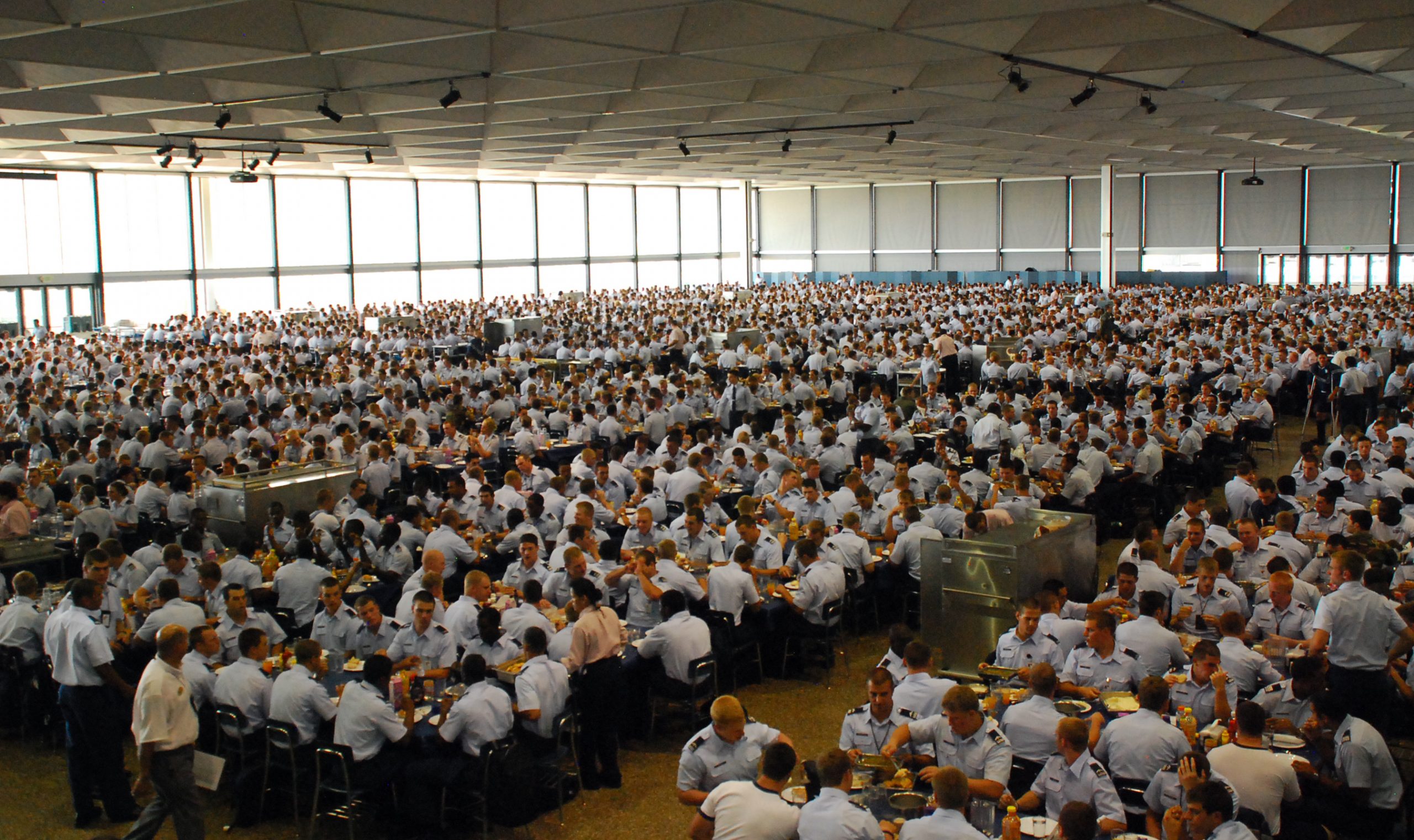
More than 4,000 cadets gather for lunch inside Mitchell Hall at the U.S. Air Force Academy in Colorado Springs, Colo., Aug. 10, 2009. A staff of 200 food service professionals prepare nearly 13,000 meals per day for cadets throughout the academic year. (U.S. Air Force photo/Ann Patton)
The NFPA 99 Healthcare Facilities Code committee develops a distinct consensus document (i.e. “regulatory product”) that is distinct from National Electrical Code Article 517; though there are overlaps and gaps that are the natural consequence of changing technology and regulations. It is worthwhile reviewing the scope of each committee:
NFPA 99 Scope: This Committee shall have primary responsibility for documents that contain criteria for safeguarding patients and health care personnel in the delivery of health care services within health care facilities: a) from fire, explosion, electrical, and related hazards resulting either from the use of anesthetic agents, medical gas equipment, electrical apparatus, and high frequency electricity, or from internal or external incidents that disrupt normal patient care; b) from fire and explosion hazards; c) in connection with the use of hyperbaric and hypobaric facilities for medical purposes; d) through performance, maintenance and testing criteria for electrical systems, both normal and essential; and e) through performance, maintenance and testing, and installation criteria: (1) for vacuum systems for medical or surgical purposes, and (2) for medical gas systems; and f) through performance, maintenance and testing of plumbing, heating, cooling , and ventilating in health care facilities.
NFPA 70 Article 517 Scope: The provisions of this article shall apply to electrical construction and installation criteria in healthcare facilities that provide services to human beings. The requirements in Parts II and III not only apply to single-function buildings but are also intended to be individually applied to their respective forms of occupancy within a multi-function building (e.g. a doctor’s examining room located within a limited care facility would be required to meet the provisions of 517.10) Informational Note: For information concerning performance, maintenance, and testing criteria, refer to the appropriate health care facilities documents.
In short, NFPA 70 Article 517 is intended to focus only on electrical safety issues though electrotechnology complexity and integration in healthcare settings (security, telecommunications, wireless medical devices, fire safety, environmental air control, etc.) usually results in conceptual overlap with other regulatory products such as NFPA 101 (Life Safety Code) and the International Building Code.
Several issues were recently debated by the Article 517 technical committee during the 2023 National Electrical Code Second Draft meetings
The conditions under which reconditioned electrical equipment be installed in healthcare settings; contingent on listing and re-certification specifics.
Relaxation of the design rules for feeder and branch circuit sizing through the application of demand factors.
Application of ground fault circuit interrupters.
“Rightsizing” feeder and branch circuit power chains (Demand factors in Section 517.22)
Patient care space categories
Independence of power sources (517.30)
There are, of course, many others, not the least of which involves emergency management. For over 20 years our concern has been for the interdependency of water and electrical power supply to university hospitals given that many of them are part of district energy systems.
We need to “touch” this code at least once a month because of its interdependence on other consensus products by other standards developing organizations. To do this we refer NFPA 99 standards action to the IEEE Education & Healthcare Facilities Committee which meets online four times monthly in European and American time zones.
The transcript of NEC Article 517 Public Input for the 2023 revision of NFPA 70 is linked below. (You may have to register your interest by setting up a free-access account):
We break down NFPA 70 and NFPA 99 together and keep them on the standing agenda of both our Power and Health colloquia; open to everyone. See our CALENDAR for the next online meeting.
Issues: [12-18, [15-97] and [16-101]
Contact: Mike Anthony, Jim Harvey, Robert Arno, Josh Elvove, Joe DeRosier, Larry Spielvogel
“One of the Family” 1880 | Frederick George Cotman
NFPA 150 Fire and Life Safety in Animal Housing Facilities Code has entered its s025 revision cycle. Many education communities are responsible for animal safety in academic units, research enterprises. museums and even — as in the United Kingdom — large farm animals that wander freely on campus with students, faculty and staff. The number of colleges and universities that permit students to live with their pets has expanded; and with it the responsibilities of university administration.
From the document scope:
This standard shall provide the minimum requirements for the design, construction, fire protection, and classification of animal housing facilities. The requirements of NFPA 150 recognize the following fundamental principles:
(1) Animals are sentient beings with a value greater than that of simple property.
(2) Animals, both domesticated and feral, lack the ability of self-preservation when housed in buildings and other structures.
(3) Current building, fire, and life safety codes do not address the life safety of the animal occupants. The requirements found in NFPA 150 are written with the intention that animal housing facilities will continue to be designed, constructed, and maintained in accordance with the applicable building, fire, and life safety codes.
The requirements herein are not intended to replace or rewrite the basic requirements for the human occupants. Instead, NFPA 150 provides additional minimum requirements for the protection of the animal occupants and the human occupants who interact with those animals in these facilities.
A full description of the project is linked below:
We provide the transcript of the back-and-forth on the current 2022 edition to inform how education communities can contribute to the improvement of this title; a subject that stirs deep feelings about animal safety in research enterprises.
Public comment on the Second Draft of the 2025 Edition will be received until March 27, 2024.
We have been advocating risk-informed animal safety concepts in this document since the 2013 Edition and have found that it is nearly impossible to overestimate the sensitivity of educational communities to the life safety of animals — either for agriculture or medical research.
We maintain the entire NFPA catalog on the standing agenda of our Prometheus colloquia. See our CALENDAR for the next online meeting; open to everyone.
Category: Fire Protection, Facility Asset Management, Academic, Risk Management
Colleagues: Mike Anthony, Josh Elvove, Joe DeRosier
More:
”Create in me a pure heart, O God, and renew a steadfast spirit within me.„ Psalms 51:10
Have a blessed Sunday all who feed humanity! #dairy#beef … pic.twitter.com/BG68A4Sn5h
We have advocated education community risk management concepts since 2007; primarily in NFPA Standard 1300 — Standard on Community Risk Assessment and Community Risk Reduction Plan Development (formerly NFPA 1600). The content of this title is close-coupled with FEMA’s National Incident Management System.
Recently the National Fire Protection Association Standards Council moved to consolidate its community risk management titles as described below.
“NFPA 1660 is in a custom cycle due to the Emergency Response and Responder Safety Document Consolidation Plan (consolidation plan) as approved by the NFPA Standards Council. As part of the consolidation plan, NFPA 1660 (combining Standards NFPA 1600, NFPA 1616, and NFPA 1620) is open for public input with a closing date of November 13, 2020.”
Discussion about school and university security are noteworthy.
As described on its title page, this product will be reconfigured as NFPA 1660 Standard on Community Risk Assessment, Pre-Incident Planning, Mass Evacuation, Sheltering, and Re-entry Programs. The title suggests that NFPA 1660 is being developed to meet market need for conformance and teaching tools. You may track movement in the concepts in the links below; many of them administrative:
NFPA 1660 will likely require one or two more revision cycles to stabilize
Public consultation on the Second Draft (NITMAM) closes September 9th. You may submit public input directly to NFPA by CLICKING HERE. We will have hosted several Security colloquia ahead of this deadline during which we will drill into technical and policy specifics.
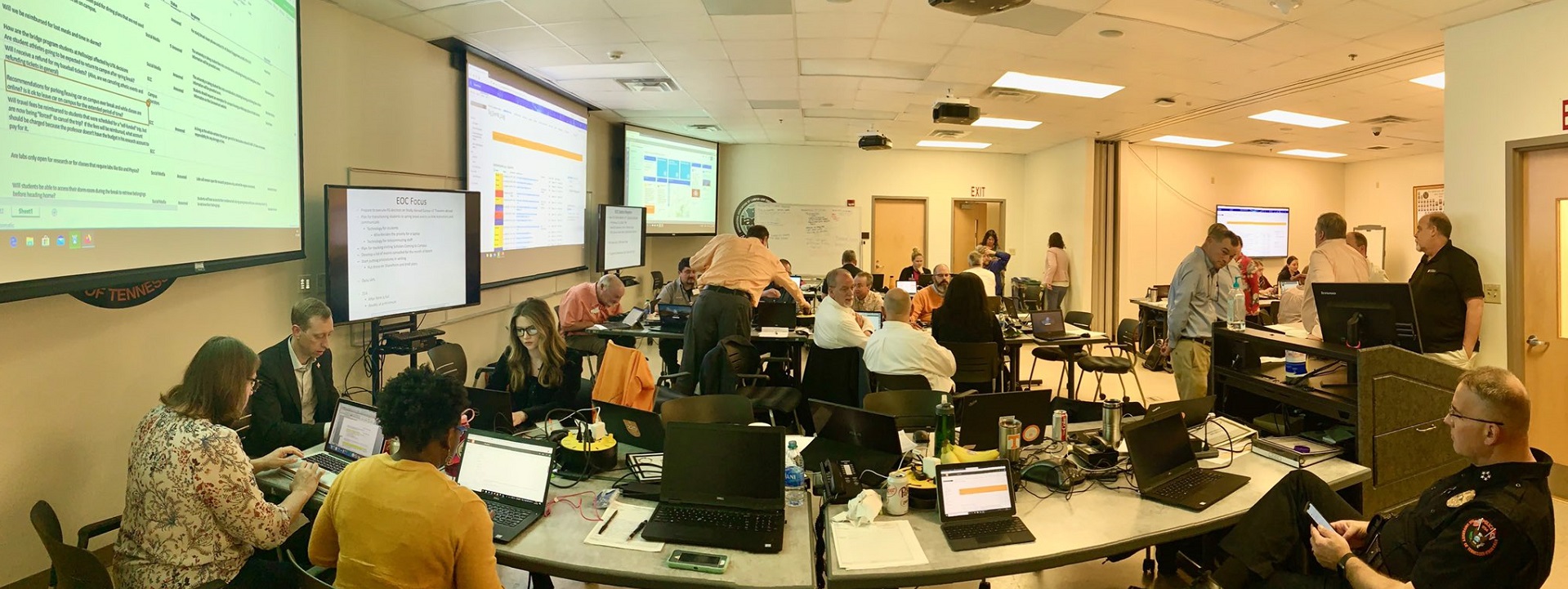
University of Tennessee
We maintain this title on our periodic Security, Disaster and Risk colloquia during which time our thoughts on the economic burden of the expanding constellation of risk management standards will be known. Thoughts that we are reluctant to write. See our CALENDAR for the next online meeting; open to everyone.
Issue: [13-58] and [18-151]
Category: Security, Risk
Colleagues: Mike Anthony, Robert G. Arno, Jim Harvey, Richard Robben
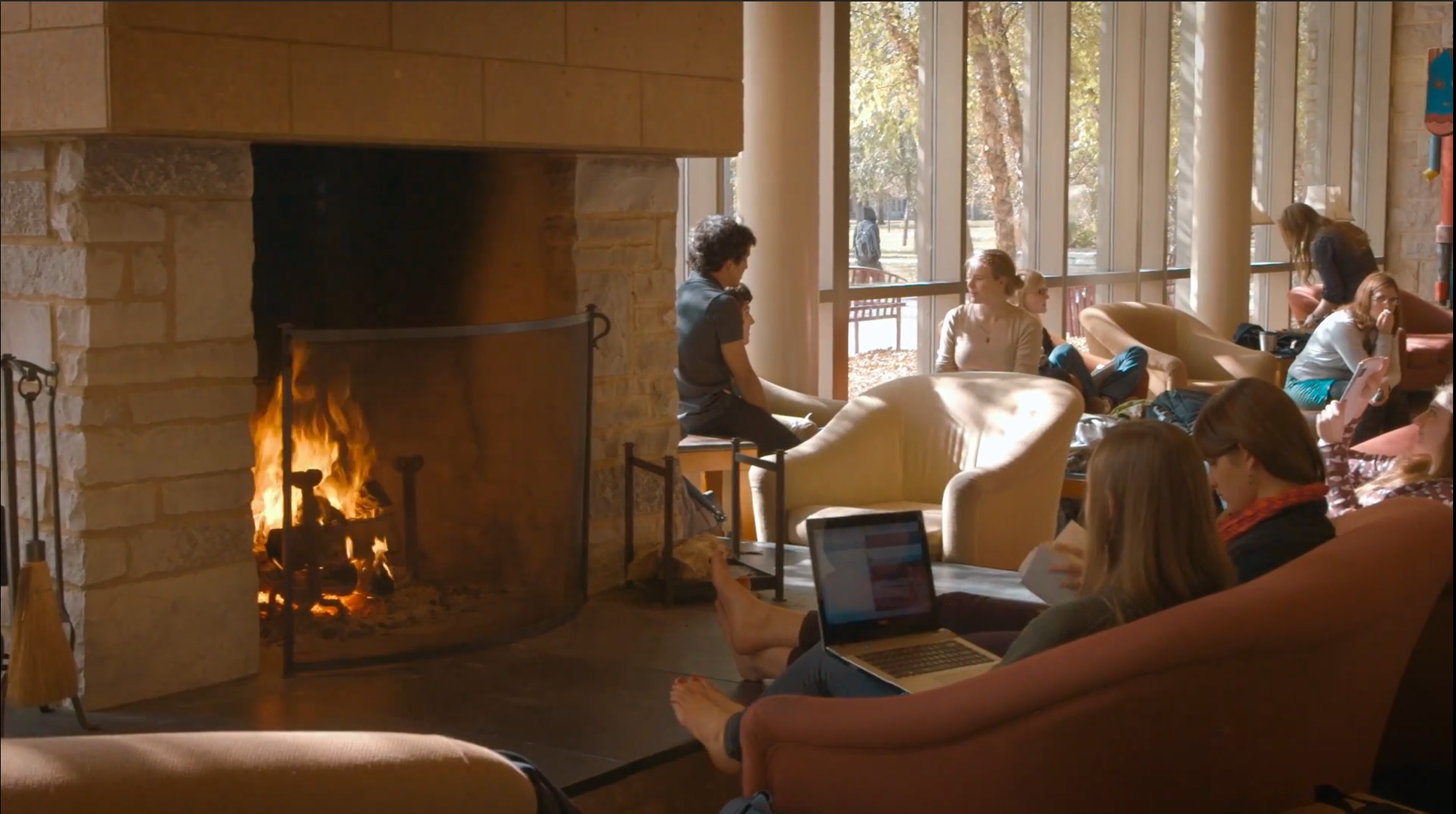
Many accommodations such as dormitories, fraternities and sororities have working fireplaces — wood burning and natural gas. Community spaces such as student unions, libraries and recreation spaces also have fireplaces as a central feature.
The purpose of NFPA 211 is to reduce fire hazards by discovering and promulgating best practice for the safe removal of flue gases, the proper installation of solid fuel-burning appliances, and the correct construction and installation of chimneys, fireplaces, and venting systems. The current 2019 Edition is linked below:
The 2024 has been released. To guide our inquiry into safety and sustainability concepts for the 2027 Edition we like review the developmental transcripts of previous edition:
Today at the usual hour we sort through the NFPA stack for fire safety system aspects during renovation, alteration, or rehabilitation of buildings. Two sections come to mind:
Chapter 43 (NFPA 101): Building Rehabilitation
NFPA 241: Safeguarding Construction, Alteration, and Demolition Operations
Use the login credentials at the upper right of our home page.
The Life Safety Code addresses those construction, protection, and occupancy features necessary to minimize danger to life from the effects of fire, including smoke, heat, and toxic gases created during a fire. It is widely incorporated by reference into public safety statutes; typically coupled with the consensus products of the International Code Council. It is a mighty document — one of the NFPA’s leading titles — so we deal with it in pieces; consulting it for decisions to be made for the following:
(1) Determination of the occupancy classification in Chapters 12 through 42.
(2) Determination of whether a building or structure is new or existing.
(3) Determination of the occupant load.
(4) Determination of the hazard of contents.
There are emergent issues — such as active shooter response, integration of life and fire safety systems on the internet of small things — and recurrent issues such as excessive rehabilitation and conformity criteria and the ever-expanding requirements for sprinklers and portable fire extinguishers with which to reckon. It is never easy telling a safety professional paid to make a market for his product or service that it is impossible to be alive and safe. It is even harder telling the dean of a department how much it will cost to bring the square-footage under his stewardship up to the current code.
The 2021 edition is the current edition and is accessible below:
Public input on the 2027 Revision will be received until June 4, 2024. Public comment on the Second Draft 2027 Revision will be received until March 31, 2026.
Since the Life Safety Code is one of the most “living” of living documents — the International Building Code and the National Electric Code also move continuously — we can start anywhere and anytime and still make meaningful contributions to it. We have been advocating in this document since the 2003 edition in which we submitted proposals for changes such as:
• A student residence facility life safety crosswalk between NFPA 101 and the International Building Code
• Refinements to Chapters 14 and 15 covering education facilities (with particular attention to door technologies)
• Identification of an ingress path for rescue and recovery personnel toward electric service equipment installations.
• Risk-informed requirement for installation of grab bars in bathing areas
• Modification of the 90-minute emergency lighting requirements rule for small buildings and for fixed interval testing
• Modification of emergency illumination fixed interval testing
• Table 7.3.1 Occupant Load revisions
• Harmonization of egress path width with European building codes
There are others. It is typically difficult to make changes to stabilized standard though some of the concepts were integrated by the committee into other parts of the NFPA 101 in unexpected, though productive, ways. Example transcripts of proposed 2023 revisions to the education facility chapter is linked below:
Since NFPA 101 is so vast in its implications we list a few of the sections we track, and can drill into further, according to client interest:
Chapter 3: Definitions
Chapter 7: Means of Egress
Chapter 12: New Assembly Occupancies
Chapter 13: Existing Assembly Occupancies
Chapter 16 Public Input Report: New Day-Care Facilities
Chapter 17 Public Input Report: Existing Day Care Facilities
Chapter 18 Public Input Report: New Health Care Facilities
Chapter 19 Public Input Report: Existing Health Care Facilities
Chapter 28: Public Input Report: New Hotels and Dormitories
Chapter 29: Public Input Report: Existing Hotels and Dormitories
Chapter 43: Building Rehabilitation
Annex A: Explanatory Material
As always we encourage front-line staff, facility managers, subject matter experts and trade associations to participate directly in the NFPA code development process (CLICK HERE to get started)
NFPA 101 is a cross-cutting title so we maintain it on the agenda of our several colloquia —Housing, Prometheus, Security and Pathways colloquia. See our CALENDAR for the next online meeting; open to everyone.
Issue: [18-90]
Category: Fire Safety, Public Safety
Colleagues: Mike Anthony, Josh Elvove, Joe DeRosier, Marcelo Hirschler
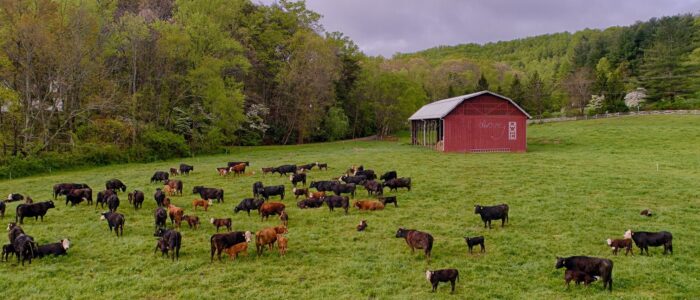
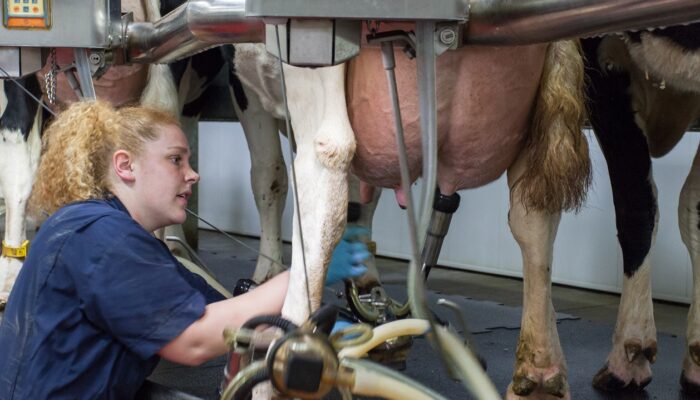
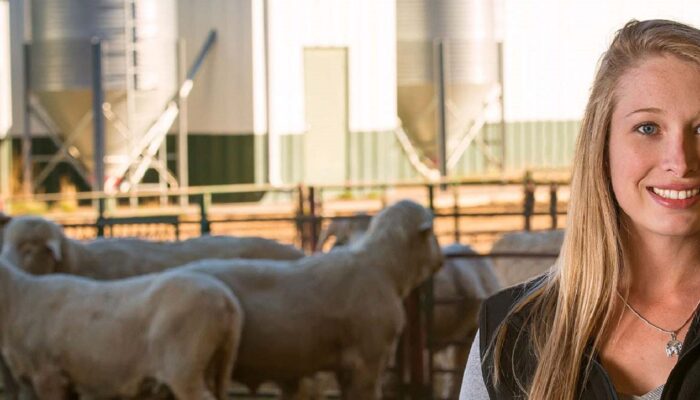
Many land grant colleges and universities are stewards of agricultural facilities that require reliable electrical power that is safe and sustainable for livestock well off the core campus distribution grid. Today we examine the 2026 National Electrical Code safe electric service rules with an eye toward the close date of April 6th for public input on the 2029 NEC.
Many land grant colleges and universities are stewards of agricultural facilities that require reliable electrical power that is safe and sustainable for livestock and animal habitat for sporting.
The premise wiring rules for hazardous university owned buildings have been relatively stable. Electrical professionals are guided by:
Farm Load Calculations of Part V of Article 220,
Corrosion mitigation with appropriate specification of power chain wiring
Stray voltage and the equipotential plane
Interactivity with regulated utility power sources.
Public response to the First Draft of the 2026 National Electrical Code will be received until August 28, 2024. We coordinate our approach to the entire NFPA electrical suite with the IEEE Education & Healthcare Facilities Committee which meets 4 times monthly. We typically refer to previous transcripts of technical committee actions to inform any changes (improvements) that we propose, if any.
We maintain this issue on the standing agenda of our Power and Nourriture (Food) colloquia. Feel free to join us with the login credentials at the upper right of our home page.
Today at 16:00 UTC we review best practice for engineering and installing the point of common coupling between an electrical service provider its and an purchasing — under the purview of NEC CMP-10.
Use the login credentials at the upper right of our home page.
The relevant passages of the National Electrical Code are found in Article 230 and Article 495. We calibrate our attention with the documents linked below. These are only representative guidelines:
We are in the process of preparing new (original, and sometimes recycled) proposals for the 2026 National Electrical Code, with the work of Code Panel 10 of particular relevance to today’s topic:
First Draft Meetings: January 15-26, 2024 in Charleston, South Carolina
Electrical meter billing standards are generally regulated at the state or local level, with guidelines provided by public utility commissions or similar regulatory bodies. These tariff sheets are among the oldest in the world. There are some common standards for billing and metering practices, including:
Meter Types: There are various types of meters used to measure electricity consumption, including analog (mechanical) meters, digital meters, and smart meters. Smart meters are becoming more common and allow for more accurate and real-time billing.
Billing Methodology:
Residential Rates: Most residential customers are billed based on kilowatt-hours (kWh) of electricity used, which is the standard unit of energy.
Demand Charges: Some commercial and industrial customers are also subject to demand charges, which are based on the peak demand (the highest amount of power drawn at any one point during the billing period).
Time-of-Use Rates: Some utilities offer time-of-use (TOU) pricing, where electricity costs vary depending on the time of day or season. For example, electricity may be cheaper during off-peak hours and more expensive during peak hours.
Meter Reading and Billing Cycle:
Monthly Billing: Typically, customers receive a bill once a month, based on the reading of the electricity meter.
Estimation: If a meter reading is not available, some utilities may estimate usage based on historical patterns or average usage.
Smart Meter Readings: With smart meters, some utilities can provide daily or even hourly usage data, leading to more precise billing.
Meter Standards: The standards for electrical meters, including their accuracy and certification, are set by national organizations like the National Institute of Standards and Technology (NIST) and the American National Standards Institute (ANSI). Meters must meet these standards to ensure they are accurate and reliable.
Utility Commission Regulations: Each state has a utility commission (such as the California Public Utilities Commission, the Texas Public Utility Commission, etc.) that regulates the rates and billing practices of electricity providers. These commissions ensure that rates are fair and that utilities follow proper procedures for meter readings, billing cycles, and customer service
Large University “Utilities”. Large colleges and universities that generate and distribute some or all of their electric power consumption have developed practices to distribute the cost of electricity supply to buildings. We will cover comparative utility billing practices in a dedicated colloquium sometime in 2025.
Starting 2025 — and continuing through 2026 — we change our approach to responding to public consultation in the development of the NFPA catalog. Draft proposals are listed at the bottom of this page.
Here are 10 possible definitions or terms for college student housing facilities shared by 4 to 6 unrelated students:
Dormitory Suite: A shared living space within a dormitory building, featuring individual or shared bedrooms, a common living area, and sometimes a small kitchen or bathroom, designed for 4–6 students.
Apartment-Style Housing: On-campus or off-campus apartments with multiple bedrooms, a shared kitchen, living room, and bathroom(s), accommodating 4–6 students.
Cooperative Housing (Co-op): A student-managed housing unit where 4–6 unrelated students share responsibilities for chores, cooking, and maintenance while living together in a house or apartment.
Shared Residence Hall Unit: A section of a residence hall with private or semi-private bedrooms and shared common areas like a lounge or kitchen, housing 4–6 students.
Cluster Housing: A group of bedrooms clustered around a shared living space, often including a kitchenette or bathroom, designed for 4–6 students in a residence hall or apartment complex.
Pod-Style Housing: A modern dorm layout where 4–6 students share a compact unit with individual or paired bedrooms, a common area, and shared facilities like a bathroom or kitchen.
Student Townhouse: A multi-level housing unit, typically off-campus or in university-owned complexes, with shared living spaces and multiple bedrooms for 4–6 students.
Quad or Hex Apartment: An apartment specifically designed for 4 (quad) or 6 (hex) students, featuring shared amenities like a kitchen, living room, and bathroom(s).
Communal House: An off-campus house leased by 4–6 students, with shared spaces like a living room, kitchen, and bathrooms, often independently rented but sometimes university-affiliated.
Living-Learning Community Unit: A shared housing arrangement for 4–6 students in a residence hall, centered around a specific academic or thematic focus, with shared common areas to foster collaboration.
These definitions reflect common housing arrangements for unrelated college students, based on typical university housing structures and off-campus options.
Should show up in NFPA 101 and referral to them is appreciated.
New update alert! The 2022 update to the Trademark Assignment Dataset is now available online. Find 1.29 million trademark assignments, involving 2.28 million unique trademark properties issued by the USPTO between March 1952 and January 2023: https://t.co/njrDAbSpwBpic.twitter.com/GkAXrHoQ9T